The 20 Most Powerful Marvel Characters, Ranked By What They Can Actually Do
Not who wins a fight — who rewrites the rules of the fight. Twenty characters ranked on scale of authority, from planetary threats to beings who outrank reality itself.
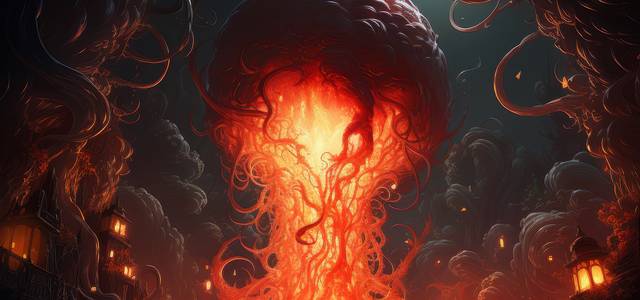
Power rankings in Marvel usually collapse into the same argument: who would win. That question is unanswerable, because Marvel's cosmology is not a ladder, it is a set of jurisdictions. A being who can shatter a planet and a being who can edit the rules governing planets are not on the same axis at all.
So this list does not ask who wins. It asks a harder question: how much of reality does this character have authority over, and how reliably can they exercise it?
The Criteria: Four Tests, Applied In Order
- Scale of effect. Personal, planetary, galactic, universal, or multiversal. This sets the tier and nothing below it can lift you out.
- Reliability. Can they do it on demand, or only when a cosmic entity, an artefact or an emotional crisis lets them? Conditional power is discounted heavily.
- Category of effect. Force is the weakest category. Energy manipulation beats force. Reality and conceptual authority beat everything.
- Track record on the page. Feats that happened in published comics count. Feats a narrator claimed are possible do not.
One consequence of rule four: the film versions of these characters are usually weaker than the page versions, sometimes dramatically. Where the gap matters, it is noted rather than smoothed over.
Tier One: Authority Over Reality Itself
1. The One Above All
Marvel's actual supreme being, deliberately kept almost entirely off-page. Everything else in this article operates inside a system this entity authored. There is no feat to cite because feats are a category error at this level — the One Above All does not act on reality, it is the condition under which reality holds. Ranked first and then set aside, because a list where the top entry cannot be argued with is a boring list.
2. The Living Tribunal
The three-faced judge who rules on multiversal balance, and the highest entity in Marvel that actually shows up and does things. The Living Tribunal has overruled cosmic beings, sealed off realities and set binding limits on entities who consider themselves absolute. Critically, its rulings are enforceable — that is the difference between power and authority, and it is the only entity below the One Above All that has both.
3. Eternity and Infinity
Eternity is the universe as a conscious being; Infinity is its counterpart. They are not characters who use power, they are the containers power happens inside. Thanos with a completed Gauntlet in Infinity Gauntlet briefly usurped Eternity's position and became the universe — which tells you both how high Eternity sits and how the Gauntlet cheats the ladder entirely.
Tier Two: Conditional Omnipotence
4. The Phoenix Force
The nexus of all psionic energy, a genuine cosmic force of creation and destruction that has consumed stars and unmade galaxies. The Phoenix would rank higher on raw ceiling, but it is discounted for the reliability test — it operates through hosts, and hosts corrupt, resist and die. Its power is real and its control is not, which is why the Phoenix Force is worth explaining properly rather than just gesturing at.
5. Franklin Richards
A human child with reality-warping capability rated at the very top of the mutant scale. Franklin created an entire pocket universe to preserve his family, and in Hickman's Fantastic Four he restores a dying Galactus and reshapes him. The highest ceiling of any Earth-born character. Discounted only because Marvel has spent forty years finding reasons to keep him from using it.
6. Scarlet Witch
House of M is the feat that settles it. Wanda Maximoff rewrote global reality with a sentence and then removed the mutant gene from ninety-odd per cent of a species with three words. Chaos magic operates on probability and existence rather than force, which places her in the top category by our third test. The MCU version in Multiverse of Madness is powerful but noticeably bounded by comparison — a gap we untangle in our breakdown of what chaos magic can and cannot do.
The Full Twenty
- The One Above All — the author of the system.
- The Living Tribunal — multiversal judge with enforceable rulings.
- Eternity and Infinity — the universe as conscious entities.
- The Phoenix Force — infinite ceiling, unreliable delivery.
- Franklin Richards — reality warping at the top of the mutant scale.
- Scarlet Witch — chaos magic, House of M, and the best single feat on Earth.
- Galactus — a cosmic necessity who eats worlds and cannot stop.
- Death — an abstract personification with authority over all mortality.
- The Beyonder — a whole universe compressed into a curious man, at his original power level.
- Molecule Man — control over every molecule in existence; Secret Wars made him the anchor of the multiverse.
- The Watcher — near-limitless capability under a vow he keeps breaking.
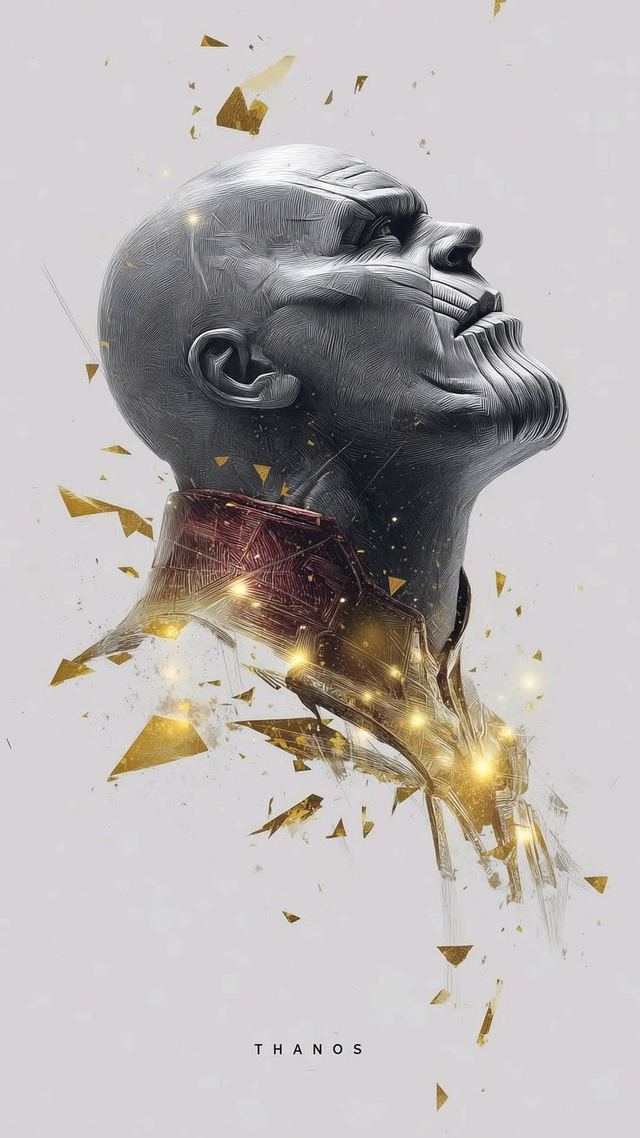
- Thanos with the Infinity Gauntlet — a mortal using borrowed omnipotence badly, and still the most consequential.
- Doctor Doom — the ceiling depends entirely on what he has stolen this year, and he always steals something.
- Odin and the Odinforce — the strongest conventional god-tier power in the Nine Realms.
- Doctor Strange — mystic authority over dimensions rather than raw output.
- Silver Surfer — the Power Cosmic at its most versatile in a single body.
- Hulk at maximum rage — no ceiling on strength, no control over reaching it.
- Sentry — a million exploding suns, permanently at war with himself.
- Thor with Mjolnir and full Odinforce — storm, flight, and the highest striking power in the pantheon.
- Vision at full phase-density control — the most underrated ceiling on this list.
Force is the cheapest currency in Marvel. Authority is the expensive one, and almost nobody has it.
The Numbers, Where Numbers Exist
Marvel's own power grid is a blunt instrument, but it is useful for comparing the physical tier — the characters who fight rather than legislate. Here is how the top of the conventional bracket sorts on a seven-point scale.
| Character | Strength | Energy | Durability | Intelligence |
|---|---|---|---|---|
| Galactus | 7 | 7 | 7 | 7 |
| Silver Surfer | 7 | 7 | 7 | 6 |
| Hulk (enraged) | 7 | 2 | 7 | 2 |
| Sentry | 7 | 6 | 7 | 3 |
| Thor | 7 | 6 | 7 | 3 |
| Thanos | 7 | 6 | 7 | 6 |
| Vision | 6 | 6 | 6 | 6 |
Notice what the grid cannot capture. Wanda would score modestly on strength and durability and would still beat every name in that table, because she does not need to hit anything. The grid measures the wrong axis for the top six entries on our list, which is precisely the point.
The Arguments We Expect To Get
- Where is Odin above Doom? Doom outranks him because Doom's ceiling is theft — Beyonder power, the Gauntlet, Secret Wars godhood — and he keeps succeeding at the theft.
- Why is Hulk only seventeenth? Unlimited strength is still strength, and strength is the cheapest category. He cannot touch anything above tier three.
- Why is Thanos below Molecule Man? Thanos borrowed omnipotence; Owen Reece holds his natively and held the multiverse together in Secret Wars.
- Why no Sylvie, Kang or the TVA? Kang is a technologist with a timeline, not a power-tier entity, and the MCU's version is now narratively closed.
The honest conclusion is that Marvel's power ladder has three rungs and most fan arguments happen entirely on the bottom one. Hulk versus Thor is a real argument. Hulk versus Eternity is not a fight, it is a category error, and the sooner a ranking admits that the more useful it becomes.
Frequently asked
Who is the most powerful Marvel character of all time?
Is Scarlet Witch more powerful than Thor?
Could Hulk beat Thanos?
Where does the MCU version of these characters rank?
Characters in this story


Catching up on the MCU? See where this fits on our full timeline.
Read next
The 10 Most Dangerous Cosmic Entities In Marvel, Ranked By Threat
Power and danger are different measurements. These ten cosmic beings are ranked on how much damage they will…
The Phoenix Force Explained: What It Is, What It Wants, And Why It Keeps Choosing Jean
It is not a bird, it is not possession, and it is not evil. A full explainer on Marvel's cosmic force of creation…
How The Infinity Stones Actually Work, According To The Comics And The Films
Six singularities, one set of rules, and a film franchise that quietly rewrote half of them. A full breakdown of…