How The Infinity Stones Actually Work, According To The Comics And The Films
Six singularities, one set of rules, and a film franchise that quietly rewrote half of them. A full breakdown of what each Stone does and where its limits are.
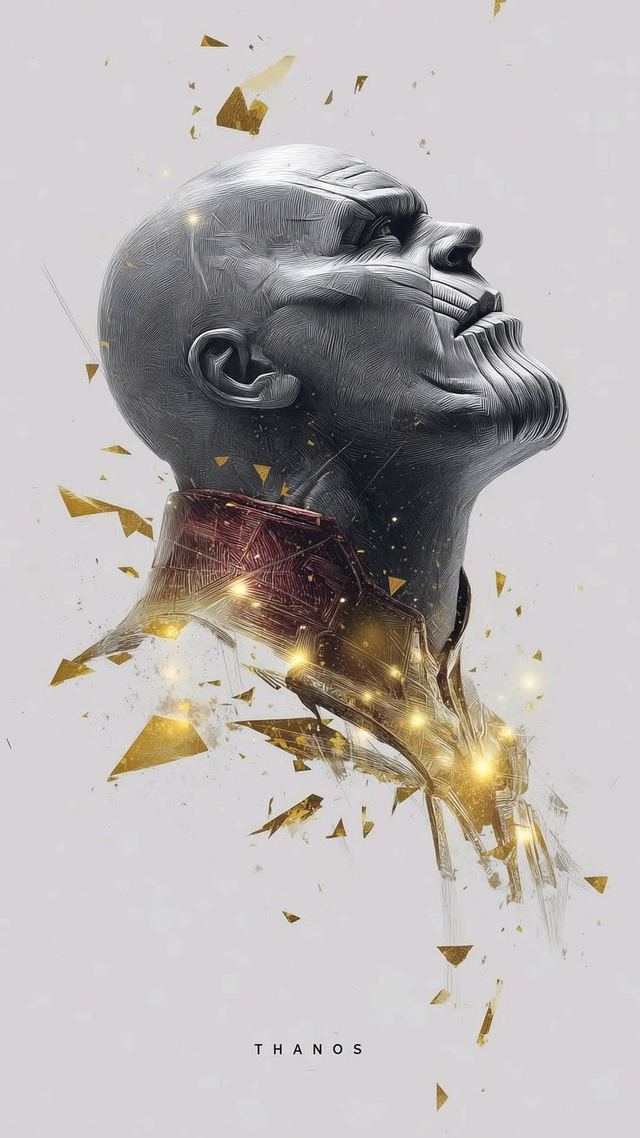
The Infinity Stones are the most heavily used artefacts in Marvel and the most poorly understood, largely because the comics and the films run on incompatible rulebooks and neither has ever been fully explained on the page or the screen.
Here is what each Stone actually does, where the hard limits are, and which of those limits the MCU quietly discarded.
What The Stones Are
Both versions agree on the origin. Six singularities predating the current universe, compressed into gems by the Big Bang, each governing a fundamental aspect of existence. The Collector's exposition in Guardians of the Galaxy is broadly accurate to the comics for once.
- In the comics they are called Infinity Gems and were originally the shattered remains of a suicidal cosmic entity known as Nemesis, a detail Marvel has re-established and abandoned several times.
- Each Stone has absolute authority within its own domain and essentially none outside it. This is the single most important rule and the one most often ignored.
- A mortal cannot hold one bare-handed for long. Every on-screen exception involves a container — the Gauntlet, the Tesseract, the Aether's host, the Eye of Agamotto.
- Used together, the Stones do not add up. They multiply, and the combined set grants omnipotence within a single universe. In the comics the Gauntlet is explicitly universe-bound, which is why the film's multiversal usage is a change rather than an adaptation.
The Six Stones, Individually
Space (the Tesseract, blue)
Authority over location. It permits instantaneous movement of anything to anywhere, and at full expression it lets the user occupy every point in space simultaneously. Its limit is that it moves things — it does not change them. The MCU used it primarily as a battery and a portal generator, considerably below its ceiling. Loki escaping with it in Endgame is the plot engine for a whole streaming series.
Mind (the Sceptre, yellow)
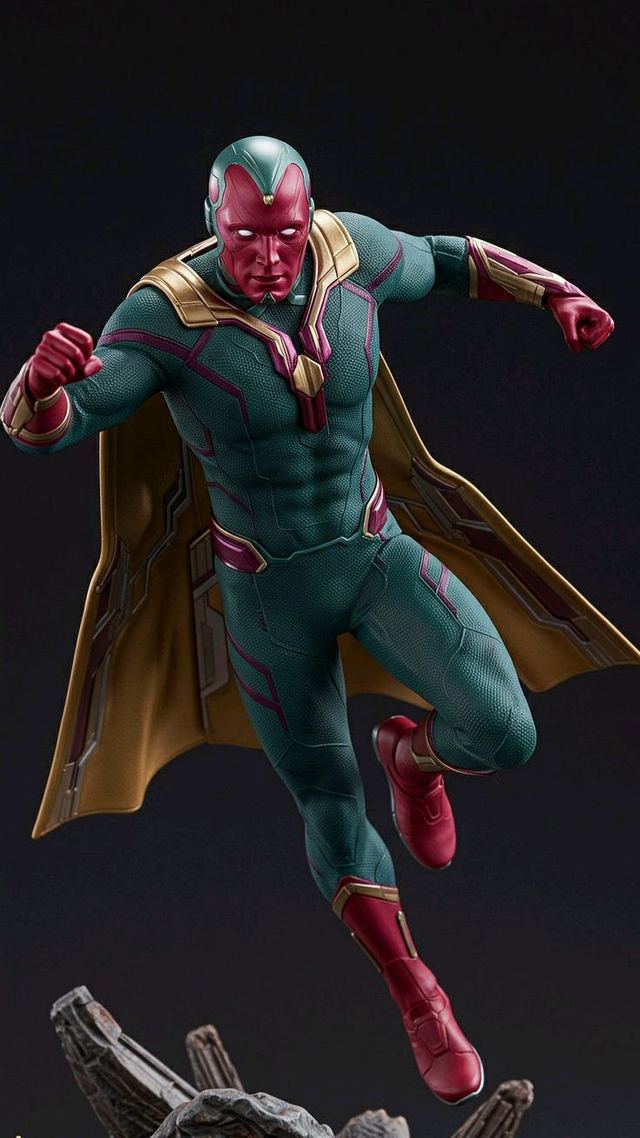
Authority over thought. It reads, controls and enhances minds, and at full power it can reach every consciousness in the universe at once. Its most important use in the MCU is not control but creation — the Mind Stone gives Vision sentience, which is the only instance of a Stone being used to make a person. That act is the foundation of Vision Quest, arriving 14 October 2026 with Paul Bettany returning and James Spader back as Ultron.
Reality (the Aether, red)
Authority over what is true. It rewrites matter, energy and physical law within its area of effect. Its limit is the user's imagination and, critically, it is the least stable Stone — the comics repeatedly show reality alterations decaying without sustained will behind them. The Dark World presented it as liquid rather than a gem, an inconsistency Endgame had to write around.
Power (the Orb, purple)
Authority over energy. It is the simplest Stone and the most immediately lethal — it grants access to all energy that has ever existed, and it destroys anyone who touches it without protection. The Xandar sequence in Guardians is the most accurate on-screen depiction of a Stone's raw danger the films have produced.
Time (the Eye of Agamotto, green)
Authority over duration. Rewind, accelerate, loop, and view any point along a timeline. This is the Stone the MCU changed most significantly: Strange uses it to view 14,000,605 futures, a scrying application the comics rarely emphasise. Its hard limit in both versions is that it does not create — it can only move things along a line that already exists.
Soul (orange)
The strangest and least explained. Authority over living essence — it can steal, manipulate, judge and contain souls, and it houses a pocket dimension called the Soul World in the comics. It is the only Stone with something resembling a will of its own, and the only one that demands a price. The Vormir rule, a soul for a soul, is an MCU invention and one of its best.
The Comparison Table
| Stone | Domain | Hard limit | MCU deviation |
|---|---|---|---|
| Space | Location | Moves, does not transform | Used mostly as a power source |
| Mind | Thought | Cannot compel a will it cannot reach | Used to create sentient life |
| Reality | Physical law | Alterations decay without will | Depicted as liquid, then a gem |
| Power | Energy | Lethal without a container | Broadly faithful |
| Time | Duration | Cannot create, only move | Heavy emphasis on future-scrying |
| Soul | Living essence | Demands a sacrifice | Vormir price is original to the films |
Where The Films And Comics Disagree
Four differences matter, and pretending they do not is how bad power-scaling arguments start.
- Scope. Comic Gauntlets are explicitly universe-bound — they do not work outside the reality they came from, which is why the Ultimate Nullifier and multiversal entities outrank them. The MCU never states this limit and the snap operates across the whole of its universe without difficulty.
- Destructibility. The comics treat the Gems as fundamentally indestructible without cosmic-tier intervention. Infinity War lets Wanda destroy the Mind Stone with an energy blast, which is a substantial power statement about her rather than about the Stone.
- Cost. In the comics, using the full Gauntlet requires the user to be able to withstand it, and Thanos subconsciously sabotages himself out of unworthiness. The MCU replaces psychological cost with physical damage, which is cleaner drama and weaker mythology.
- The Soul price. Vormir's soul-for-a-soul exchange does not exist in the comics. It is the single best addition the films made and it is the reason Natasha's death holds, since the film establishes that the transaction cannot be reversed.
Each Stone is absolute inside its own domain and almost useless outside it. Every bad Infinity Stone argument ignores that sentence.
Why The Stones Are Gone, And What Replaced Them
Endgame removed the Stones from the board deliberately. Bruce Banner's snap reverses the Blip, Tony Stark's destroys the Stones outright, and Steve Rogers returns the borrowed ones to their original moments to prevent branching. That was a hard reset of the franchise's most powerful tool, and it created the vacuum the Multiverse Saga now fills.
- Multiversal incursions replaced the Stones as the top-tier threat, which is why Avengers: Doomsday on 18 December 2026 is built around three colliding universes rather than an artefact hunt.
- Variant Stones exist in other universes and were shown as inert in Loki, a nice piece of world-building that quietly closes the door on a rerun.
- Doctor Doom, played by Robert Downey Jr., is a villain whose comics history involves stealing cosmic power rather than collecting it, which is a meaningfully different structure.
- For the entities who outrank the Gauntlet entirely, see our ranking of Marvel's most dangerous cosmic beings.
For where Stone-wielders sit against the wider power structure, see the twenty most powerful Marvel characters, and for a magic system that operates on entirely different rules, the limits of chaos magic.
Frequently asked
What do the six Infinity Stones do?
Which Infinity Stone is the most powerful?
Can the Infinity Stones be destroyed?
Will the Infinity Stones return in Avengers: Doomsday?
Characters in this story
Catching up on the MCU? See where this fits on our full timeline.
Read next
The 20 Most Powerful Marvel Characters, Ranked By What They Can Actually Do
Not who wins a fight — who rewrites the rules of the fight. Twenty characters ranked on scale of authority, from…
The 10 Most Dangerous Cosmic Entities In Marvel, Ranked By Threat
Power and danger are different measurements. These ten cosmic beings are ranked on how much damage they will…
The Limits Of Scarlet Witch's Chaos Magic, Explained
Wanda rewrote reality with three words in the comics and struggled to hold a town in the films. We map the actual…