Doctor Doom's Indomitable Will: How Latveria's Monarch Counters Jean Grey and Omega Mutants
Doctor Doom's comic-book reputation for shrugging off telepaths is well documented — but does it hold up against what Jean Grey just showed she can do to the Hulk? A speculative, tier-by-tier look at a crossover nobody has actually announced.
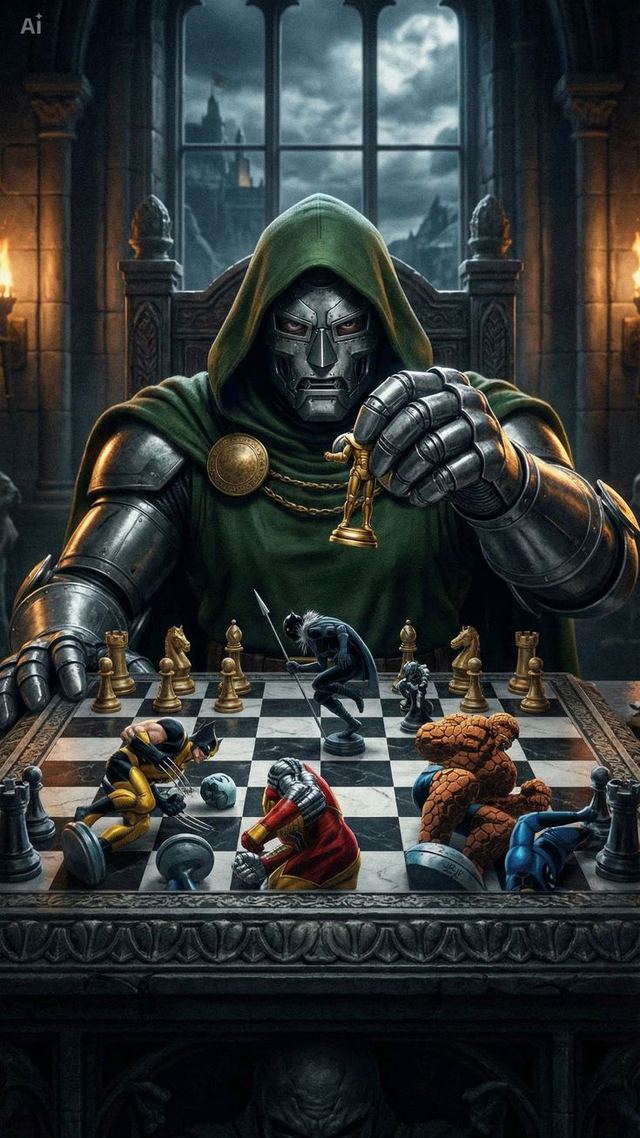
Doctor Doom doesn't do vulnerability — that's rather the point of the character. Robert Downey Jr. puts on the mask for Avengers: Doomsday on 18 December 2026, and Marvel has already been blunt about one thing: this isn't Tony Stark returning from the dead in new armour. Stark died in Avengers: Endgame, full stop, and this Doom is a distinct character built from scratch — we've gone deep on that distinction in our explainer on why Doom isn't a Stark variant. What the two characters do share is a genius-level command of their own technology; what supposedly sets Doom apart, at least on the comics page, is a mind that's very hard to get inside.
Sadie Sink's Jean Grey, meanwhile, just proved exactly how far telepathy can go on screen — in a movie that's nominally about Spider-Man, no less. In Spider-Man: Brand New Day, out since 31 July 2026, her grief over her late sister Sarah cracked open a psychic containment and sent a telepathic shockwave rolling across New York. The standout moment, the one everyone's still talking about, is what she did to Bruce Banner: she didn't provoke him into his usual rage spiral, she reached into his mind and drove him like a puppet. We broke that fight down in full in our piece on the Hulk mind-control sequence, and it's the single most useful data point for a question like this one.
Here's the thing, though: Doom and Jean Grey have never met — not in a script, not in a trailer, not in so much as a stray rumour. Nobody at Marvel Studios has linked Avengers: Doomsday and Spider-Man: Brand New Day at all — they're different franchises on different tracks of the same shared universe. So everything that follows is a hypothetical built on two real data points: what the comics have said about Doom's mental defences for sixty-odd years, and what Brand New Day just showed Jean Grey can actually do. Treat it as a fan-theory thought experiment, not a preview of anything Marvel has planned.
Confirmed, Comic Lore, and Guesswork: Sorting the Claims
Before we get into armour circuitry and psychic wards, it's worth being precise about what's actually known versus what's fan extrapolation. This piece leans on three different tiers of certainty, and we're not going to blur them together.
| Claim | Confidence Level |
|---|---|
| Robert Downey Jr. plays Doctor Doom in Avengers: Doomsday | Confirmed |
| Doom is a new character, not a returning or resurrected Tony Stark | Confirmed |
| Sadie Sink's Jean Grey mentally bypassed and controlled the Hulk in Spider-Man: Brand New Day | Confirmed |
| Doom has a comics history of resisting telepaths like the Purple Man and Onslaught | Comic-canon context |
| Reed Richards has built neural-inhibitor technology against psychic attacks in the comics | Comic-canon context |
| Doom and Jean Grey have any announced on-screen connection | Not announced |
| How a Doom-versus-Jean-Grey psychic clash would actually play out | Pure speculation |
Doom's Defence, As the Comics Have Written It
Comic-book Doom has spent decades being written as one of Marvel's harder targets for a telepath. It's never been framed as absolute invulnerability — writers love finding cracks in anyone's armour eventually — but the character has repeatedly been shown standing up to telepathic heavyweights like the Purple Man and the vast psychic entity Onslaught, at least for long enough to make the fight interesting. Exact issues and outcomes vary a lot by era and writer, and we'd rather not pretend to cite chapter and verse on decades of continuity that even longtime readers argue about.
What stays consistent is the method. Doom's mental defences work on two tracks at once: mystical wards rooted in the sorcery he studied in Tibetan monasteries and in his own mother's grimoires, and enchanted circuitry built into that armour, humming away as a kind of technological second skin. Doom doesn't trust one discipline to protect him — he's never trusted anyone or anything to do a job alone, including his own body.
The layers usually attributed to Doom's mental defences, per the comics, tend to break down roughly like this:
- Latverian sorcery — wards and protective enchantments Doom studied himself, rather than delegating the job to court mystics.
- Armour-integrated circuitry — technological safeguards built into the suit, running alongside the magical wards rather than replacing them.
- Sheer force of will — the comics lean hard on Doom's ego and mental discipline as a defence in its own right, the idea being that a mind this convinced of its own supremacy is simply harder to dislodge.
It's a pattern comics narration has returned to again and again without ever nailing down one single official explanation. Paraphrasing the general tenor of how the character has been described across decades of captions and dialogue — not quoting any specific issue — the idea tends to land somewhere like this:
Doom's mind is not a door. It is a vault within a vault, warded twice over — and he trusts no one, least of all himself, to hold the only key.
The Site's Shorthand: What We're Calling the 'Psionic Refractor' Effect
There's no single official gadget in Marvel Comics called a psionic refractor — that's not a real trademarked device name, and we want to be upfront about that. It's the phrase we're using on this site as shorthand for the pattern described above: the combination of sorcery, circuitry, and sheer bloody-mindedness that keeps showing up whenever a writer sends a telepath after Doom. Think of it less as a single button on the armour and more as a description of a recurring outcome.
What Jean Grey's Hulk Takeover Actually Tells Us
Whatever Doom's defences amount to, they'd be tested against a genuinely new tier of on-screen telepathy. Brand New Day's ending didn't just give Jean Grey headaches and nosebleeds — it gave her full override capability. She didn't anger the Hulk into smashing; she took the wheel directly, which is a meaningfully bigger claim about her power than anything the MCU had shown from a telepath before. We've mapped her full ability set in our Omega-level power scale breakdown, but the short version is: Marvel is signalling that its Jean Grey plays in Professor X's weight class, maybe past it — and that's before anyone puts a Phoenix Force joke in a trailer.
Comic readers already know where that road can lead. The Phoenix Force has turned Jean Grey into one of the single most dangerous entities in Marvel Comics more than once. The MCU hasn't gone there yet, and there's no confirmation it will. But it's the context hanging over every 'how strong is Jean Grey now' conversation, including this one.
Doom vs the X-Men's Telepath Bench
If you want the traditional measuring stick for 'who can get inside anyone's head,' the X-Men have always been it. Charles Xavier built his entire mythology around being the world's most powerful telepath before anyone had heard of Jean Grey; Jean Grey eventually matched or surpassed him depending which era you're reading; and Emma Frost has spent plenty of page time proving a telepath doesn't need Xavier's restraint to be dangerous.
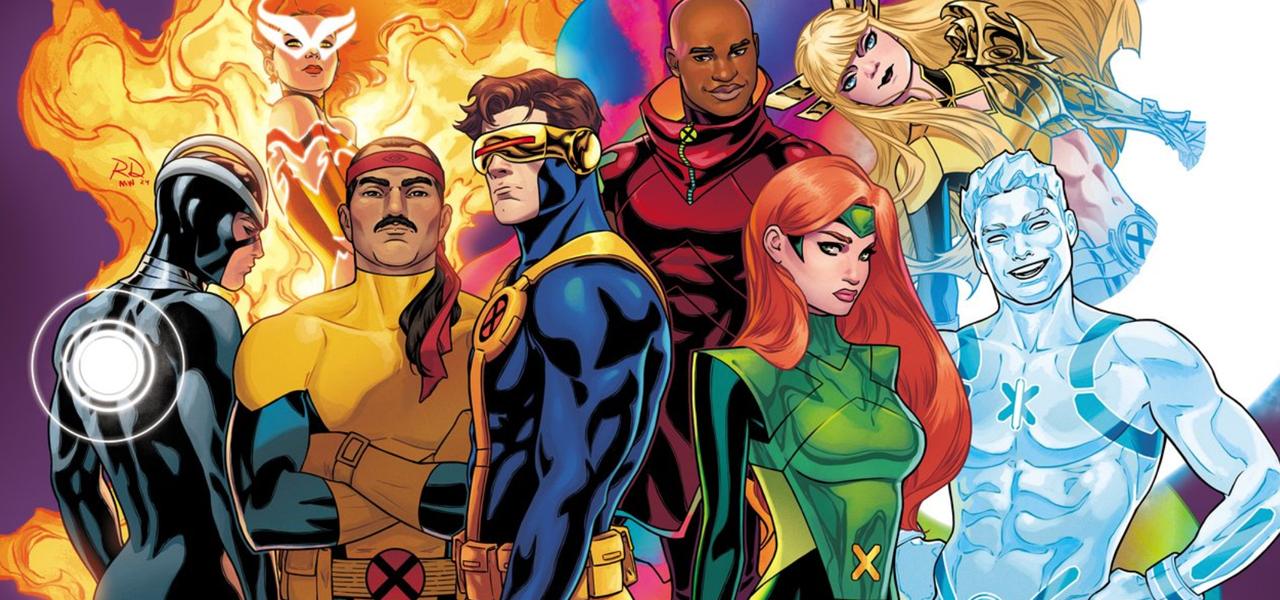
The bench Doom's comic-book defences have theoretically had to reckon with over the years includes:
- Charles Xavier — the baseline every other Marvel telepath gets measured against.
- Jean Grey — Omega-level, Phoenix-linked, and per Brand New Day, capable of direct bodily override rather than just suggestion.
- Emma Frost — the diamond-skinned telepath whose approach tends to be far less gentle than Xavier's.
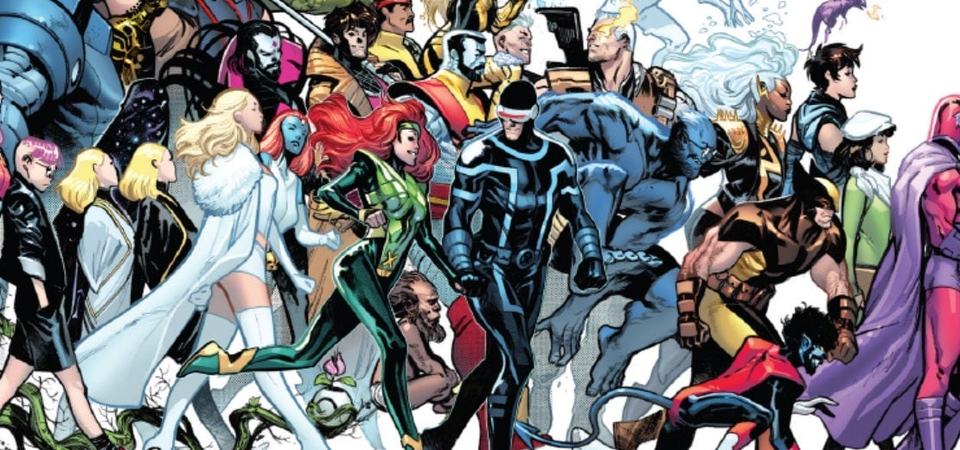
None of that is a script for Avengers: Doomsday. It's comic-book pedigree — decades of stories where Doom's armour and sorcery got tested by exactly this kind of opponent, with results that varied by writer, era, and how much plot armour Doom needed that particular month. If the MCU ever actually puts these characters in the same room, that's a decision nobody currently at Marvel has announced or even hinted at.
Two Old Rivals, Two Different Toolkits: Doom vs Reed Richards
Doom's other classic foil isn't a telepath at all. Reed Richards has spent decades of comics building scientific countermeasures to psychic attack — neural-inhibitor technology, shielding, the kind of lab-built answer you'd expect from Marvel's most stubborn rationalist. It's the same basic goal as Doom's wards, approached from the opposite direction: where Doom fuses sorcery and circuitry, Reed trusts pure science to do the whole job.
That rivalry carries real weight now that both actors are locked into the same MCU chapter. Reed Richards (Pedro Pascal) is confirmed for Avengers: Doomsday alongside Doctor Doom, continuing straight out of The Fantastic Four: First Steps — we've covered that film's setup in our First Steps ending explainer. Two geniuses, two completely different philosophies about keeping something out of your own head, sharing a cast list for the first time.
So — Could Doom Actually Resist Jean Grey?
Short answer: nobody knows, because nobody's writing it. Longer answer: the theory has some fun internal logic, if you're willing to play along, treating it explicitly as the speculative exercise it is.
- Jean Grey would first need to locate Doom at all — no small task against a monarch who rarely leaves Latveria without an army of Doombots as decoys.
- Her assault would hit both halves of the fandom's 'psionic refractor' idea at once — sorcerous wards and armour circuitry — rather than one soft, undefended target.
- If comic precedent holds even loosely, Doom wouldn't need to win outright, just resist long enough to counter with technology, magic, or — this being Doom — sheer manipulation.
That's the theory, and it's exactly that: a theory, built by fans (us included) stacking two unconnected data points on top of each other. Marvel hasn't announced a Doom/X-Men crossover story of any kind. The standalone X-Men film doesn't land until 15 December 2028; director Jake Schreier and writer Michael Lesslie are confirmed, but casting is not, and Schreier has already had to publicly shoot down viral fan-casting rumours. We've tracked what's actually known about that process in our breakdown of Schreier's casting strategy, and it's worth a read before getting attached to any fan-cast Cyclops.
Where Doom, Jean Grey, and the wider X-Men actually intersect on the MCU timeline — if they ever do — is genuinely unknown. Doomsday arrives first, on 18 December 2026, already juggling heroes from three converging universes; the X-Men don't get a solo MCU vehicle for another two years after that. Anything past that is fans doing what fans do best: building a fight nobody's officially scheduled.
Frequently asked
Is Doctor Doom secretly Tony Stark in Avengers: Doomsday?
Has Marvel confirmed any connection between Doctor Doom and Jean Grey?
Can Doctor Doom actually resist telepathy in the Marvel comics?
What did Jean Grey do to the Hulk in Spider-Man: Brand New Day?
What is the 'psionic refractor' mentioned in this article?
Will Jean Grey appear in Avengers: Doomsday?
Characters in this story
Doctor Doom
Victor von Doom

Jean Grey
Jean Elaine Grey

Professor X
Charles Francis Xavier

Emma Frost
Emma Grace Frost

Mister Fantastic
Reed Richards
Catching up on the MCU? See where this fits on our full timeline.
Read next

The Omega-Level Mind: How Jean Grey's Telepathy Rewrites MCU Power Scaling After Brand New Day
Jean Grey's telepathy broke New York wide open in Brand New Day. Here's how her confirmed on-screen feats stack up…

Hulk Unchained: Why Dr. Banner Lost Control and Couldn't Be 'Nerfed' by Plot
Jean Grey didn't break Bruce Banner's control - she bypassed it. Here's how Brand New Day's Hulk rampage works, and…
Spider-Man: Brand New Day — Full Ending Explained (Major Spoilers)
Spider-Man: Brand New Day is finally in theaters, and the twist ending is a big one. Here's every beat explained…