Is Doctor Doom Actually A Tony Stark Variant? Weighing The Biggest Doomsday Theory
One actor, two characters, and the theory that ate the internet. We weigh the Stark-variant idea against what Marvel has said and what the comics establish.
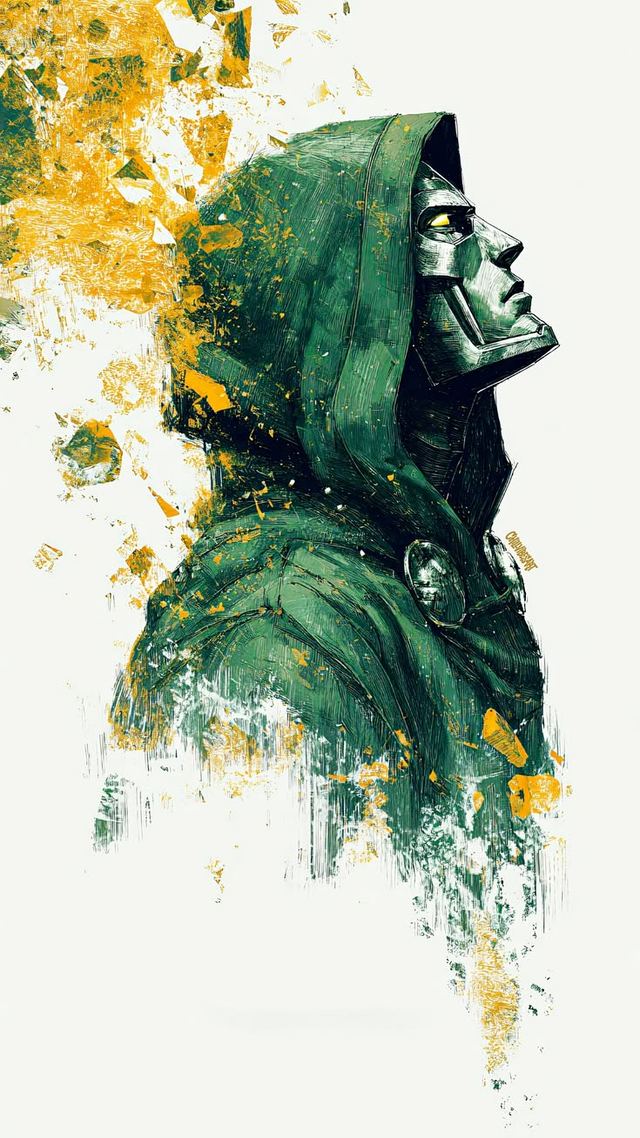
Marvel has not confirmed that Doctor Doom is a Tony Stark variant, and on the available evidence we do not think he is. The theory exists for one reason: Robert Downey Jr. plays both characters. That is a casting decision, not a plot point, and Marvel has a documented history of recasting actors across unrelated Marvel roles. Nothing in the studio's statements, the official logline for Avengers: Doomsday or the comics source material supports the connection. It remains possible. It is not supported. Here is the evidence on both sides, weighed honestly.
The Theory, Stated Fairly
The argument runs like this. Downey defined the MCU as Tony Stark for eleven years. Marvel then cast the same actor as its next franchise villain, a decision so strange that it demands an in-story explanation. The tidiest explanation available is that this Doom is a Stark from another reality - a version who survived, who lost, who hardened, and who arrived at the conclusion that the world would be safer under his direct control. It converts a jarring casting choice into a thematic payoff, and it gives the finale of the Multiverse Saga an emotional spine it would otherwise have to build from scratch.
It is a good theory. Good theories are not the same as reported ones, and the distinction is the entire point of this article.
What Marvel Has Actually Said
Very little, and the little it has said is worth reading precisely. Marvel confirmed Downey in the role of Victor von Doom. The character is named Victor von Doom in the announcement. The official logline for the film describes heroes from three distinct universes facing an existential threat and does not mention Stark, Iron Man, or any connection between the villain and any existing MCU character.
- Confirmed: Robert Downey Jr. plays Doctor Doom in Avengers: Doomsday, released 18 December 2026.
- Confirmed: Anthony and Joe Russo direct, Michael Waldron writes.
- Confirmed: Downey is currently the only publicly announced cast member of Avengers: Secret Wars, 17 December 2027.
- Not confirmed: Doom's origin, nationality, universe of origin, or any relationship to Tony Stark.
- Not confirmed: whether Doom is a variant of anyone at all.
- Not commented on: the Stark-variant theory itself, which Marvel has never addressed in either direction.
The absence of a denial is not evidence. Marvel routinely declines to address theories about unreleased films, including ones that turned out to be wrong. Silence in July tells you nothing about December.
What The Comics Establish About Doom's Origin
This is the strongest argument against the theory, and it is rarely made properly. Victor von Doom is not a blank slate that Marvel can pour anything into. He debuted in Fantastic Four #5 in 1962, created by Stan Lee and Jack Kirby, and his origin has been remarkably stable for over sixty years.
He is Romani, born in Latveria, the son of a healer and a witch. His mother's dealings with dark magic define his childhood. He goes to America on a scholarship, meets Reed Richards, refuses Reed's correction to his experiment out of pride, and is scarred when it explodes. He returns to Latveria, seizes the throne, and rules it as an absolute monarch who is genuinely, uncomfortably good at governing. That combination of scientist, sorcerer and head of state is the character. We traced the full arc in our origin breakdown.
Doom's tragedy is that his mother's soul is in hell and his face is ruined and he blames a man who tried to help him. Replace that with a Tony Stark backstory and you have not adapted Doctor Doom. You have replaced him.
None of this requires Marvel to follow it. Films adapt freely and always have. But it does mean the Stark-variant theory asks Marvel to discard the single most stable origin in its catalogue at the exact moment it is introducing the character to a mass audience for the first time, immediately before a 2028 X-Men relaunch and an ongoing Fantastic Four franchise that both depend on Doom being Doom. That is a strategic cost, not just a creative one.
Why Casting Alone Is Not Evidence
The theory's entire load is carried by one fact: the same actor. Marvel's own history makes that fact weaker than it looks. Actors have crossed between unrelated Marvel roles repeatedly, and no film has ever suggested those roles were secretly connected.
| Actor | First Marvel role | Later Marvel role | Connected in-story? |
|---|---|---|---|
| Chris Evans | Johnny Storm, Fantastic Four (2005) | Steve Rogers, Captain America (2011) | No |
| Michael B. Jordan | Johnny Storm, Fantastic Four (2015) | Killmonger, Black Panther (2018) | No |
| Josh Brolin | Thanos, MCU | Cable, Deadpool 2 (2018) | No |
| Gemma Chan | Minn-Erva, Captain Marvel (2019) | Sersi, Eternals (2021) | No |
| Ryan Reynolds | Hannibal King, Blade: Trinity (2004) | Deadpool | No |
Chris Evans is the sharpest example, and it is instructive that he is also in Doomsday with an unconfirmed role. He played the Human Torch and then Captain America, in the same corporate family, without either film implying the two were variants of one another. Marvel treats actors as actors. The idea that shared casting must carry narrative meaning is a fan-community assumption, not a studio practice.
The Fantastic Four: First Steps Context
The Fantastic Four: First Steps took $519.1 million worldwide against a $200 million budget in July 2025, with an 87% Rotten Tomatoes score, making it Marvel's biggest film of that year. It is set on a retro-futurist Earth in an alternate 1960s - a fully separate reality with its own space programme, its own culture and its own Galactus - and its mid-credits stinger ends with a masked figure appearing in the room where Franklin Richards sleeps.
That stinger is the closest thing to on-screen setup Doom has, and it is worth noting what it does not do. It does not show a face, state a name, offer an origin, or reference Stark, Iron Man or the main MCU timeline in any way. Everyone who says the stinger supports the Stark-variant theory is reading a masked figure and supplying the rest. It is equally consistent with a straightforward Latverian Doom, and arguably more so, given that the scene takes place in the Fantastic Four's own universe where a Doom would belong natively.
The Case For, Honestly Stated
We do not think the theory holds, but the arguments for it are real and should be represented properly rather than strawmanned.
- The Russos and Michael Waldron have both worked extensively in multiverse-forward material, and the film's confirmed logline is explicitly about three colliding realities. A variant villain is structurally available in a way it would not be in a normal film.
- Marvel's marketing has leaned on the visual echo between the two characters, and the studio is clearly aware audiences see it. Awareness is not intent, but it is not nothing either.
- The comics themselves have repeatedly framed Doom and Stark as mirror images - two armoured geniuses separated only by whether they believe they should be in charge. A film could make that literal without inventing the parallel.
- Marvel has withheld far bigger reveals. The studio spent months publicly denying that Andrew Garfield and Tobey Maguire were in No Way Home. Official denials are not proof, so official silence certainly is not.
Our Conclusion
We rate the Stark-variant theory as unconfirmed and unlikely, at roughly the confidence you would give an elegant guess with no sourcing behind it. The casting is the only evidence, the casting has non-narrative explanations that fit perfectly well, the comics origin is unusually stable and commercially load-bearing across three franchises, and Marvel has never hinted at the connection in any official material.
If Doomsday reveals in December that Doom is a Stark, we will have been wrong about a theory we flagged as possible, which is a survivable outcome. The alternative - asserting it now because it is popular - would mean telling readers a fan theory is a fact for five months. For the related question of whether Tony Stark himself returns, see our piece on that, and for everything the studio has actually confirmed about the film, our full Doomsday guide has it in one place.
Frequently asked
Is Victor von Doom actually Tony Stark?
Has Marvel commented on the Stark-variant theory?
What is Doctor Doom's origin in the comics?
Does the Fantastic Four: First Steps stinger prove Doom is Tony Stark?
Why would Marvel cast the same actor as two different characters?
Will Avengers: Doomsday explain Doom's origin?
Characters in this story
Read next
What Is Avengers: Doomsday About? The Confirmed Story, Cast And December 2026 Release
Marvel's next Avengers film lands 18 December 2026. Here is exactly what the studio has confirmed about the story…
Is Tony Stark Alive In Avengers: Doomsday? The Straight Answer On Robert Downey Jr.'s Return
Robert Downey Jr. is back in the MCU this December. Tony Stark is not. Here is the unambiguous answer to the Iron…
How Victor Von Doom Became Doctor Doom: The Origin, Beat By Beat
A dead mother, a scarred face, and one refusal to check his own work. The complete origin of Marvel's greatest…