Hulk Unchained: Why Dr. Banner Lost Control and Couldn't Be 'Nerfed' by Plot
Jean Grey didn't break Bruce Banner's control - she bypassed it. Here's how Brand New Day's Hulk rampage works, and why it left Peter no choice but to change.
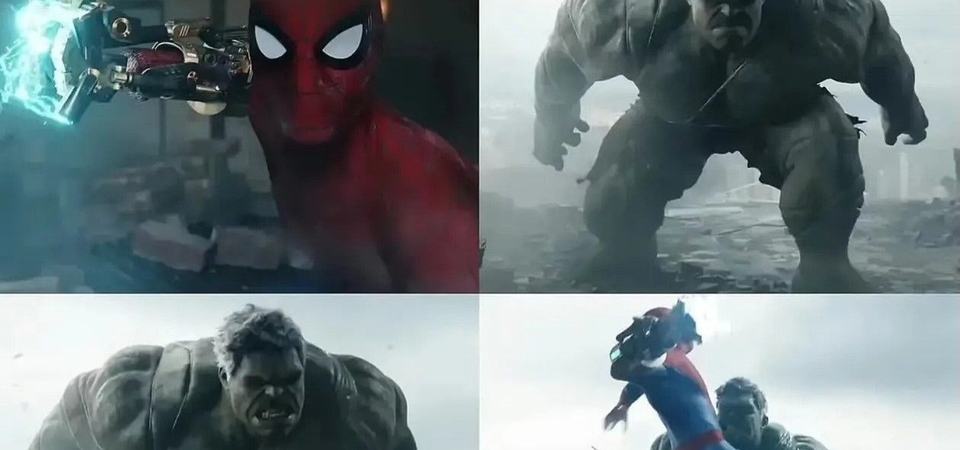
Hulk Unchained is the loudest fifteen minutes of Spider-Man: Brand New Day, and it's also the most carefully engineered. The film needed an uncontrolled Hulk to come after Peter Parker in the third act without quietly undoing eight years of established continuity, and untangling how the writers solved that problem is really what a proper Hulk Brand New Day fight explained breakdown has to cover.
If you haven't read our full ending explained recap yet, here's the short version: Jean Grey's grief cracks New York wide open, and on her way to finding Peter she goes straight through Bruce Banner's mind. What follows on screen is not Bruce losing himself the way he used to in the early Avengers days. It's Bruce being taken from the inside, by someone stronger than he is.
That distinction is the whole ballgame. It's the reason this fight reads as a genuine threat instead of a cheap contrivance, and the reason Brand New Day can put Hulk back on a rampage without quietly retconning everything Endgame and She-Hulk built. Here's how it happens, why it doesn't reopen old wounds in Banner's story, and what it costs Peter to end it.
A Hero Already Cracking Before the Final Act
By the time this fight breaks out, Peter is already mid-collapse. His spider DNA has been overwhelming his human DNA since MJ's memory loss triggered the first blackout, and he's spent the back half of the film trying, and failing, to hold the line. He built his own inhibitor after Bruce Banner explicitly warned him not to, and it detonated his web-shooters in an alley for his trouble.
So when Jean's psychic shockwave hits and Hand operatives start converging on him alongside a very large, very angry green problem, Peter isn't walking into this fight at full strength. He's walking in already broken, which is exactly why the film can afford to put something as overwhelming as an uncontrolled Hulk in front of him. There's nowhere left to retreat to.
How Jean Grey Got Inside Bruce Banner's Head
Jean Grey's telepathic surge doesn't ask Bruce for permission and it doesn't wear him down through repeated pressure. It routes around his mental barriers entirely, the same way a skeleton key doesn't pick a lock so much as ignore it. Time freezes across the city, Hand operatives are sent after Peter first, and then Jean turns her attention, and her control, onto Banner.
- She isn't fighting Bruce's willpower — she's treating his mind as unlocked terrain and walking straight in.
- The Hulk that emerges is the real thing: full strength, full rage, none of the internal brakes Banner has relied on since Endgame.
- Banner has no say in any of it. He's not choosing to rage, he's a passenger inside his own body while Jean drives.
- The instant Jean's grief resolves later in the fight, Banner's own control reasserts itself immediately — there's no lingering damage to his psyche.
That last point is the one worth sitting with, because it's what separates this from every previous time Hulk has gone off-script in the MCU.
The Standoff Before the Storm
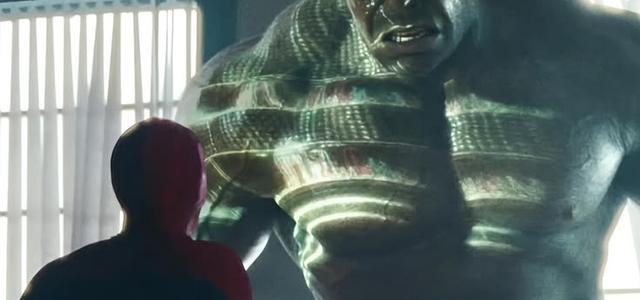
Before the punches land, there's a beat where Peter clocks that something is deeply wrong. This isn't the Bruce Banner who talked him through the inhibitor schematics at Empire State University. The eyes are wrong, the stillness is wrong, and Peter — already running on fumes — has to make a split-second read on whether he's facing a friend, a monster, or both.
"I can't keep covering for you if you fight like a monster." — Detective DeWolfe, earlier in the film
DeWolfe's warning was aimed at Peter after the Scorpion showdown, but it hangs over this entire sequence. He's about to fight something far more monstrous than anything he's become, and he's going to have to decide, in real time, how much of himself he's willing to let go of to survive it.
Why the Writers Didn't (and Couldn't) Retcon Smart Hulk
It's worth being upfront about something: this site ran a piece called our pre-release theory speculating that Brand New Day might permanently bring back the feral, non-verbal Hulk of the early MCU. That theory was wrong about the mechanism, though it correctly sensed something big was coming for Banner. What actually happens is far more surgical — Jean's telepathic override lasts exactly one scene, and Bruce's controlled, articulate Smart Hulk status, established since Endgame and reinforced across She-Hulk, is fully intact the moment she lets go.
| Moment | What actually happens to Banner | Does it undo Smart Hulk? |
|---|---|---|
| Avengers: Age of Ultron | Wanda's vision spikes Hulk's rage; no telepathic takeover involved | No — predates Smart Hulk entirely |
| Avengers: Endgame / She-Hulk | Banner deliberately merges Hulk's body with his own intellect | Establishes Smart Hulk as the baseline |
| Brand New Day | Jean Grey telepathically overrides Banner's mind for a single scene, forcing rage against his will | No — control returns the instant Jean's grief resolves |
That's the trick, and it's a genuinely clever one from a writing standpoint. Give Hulk a reason to be dangerous again without erasing years of character growth, and you get to have the spectacle without the backlash. Banner isn't regressing. He's being puppeted, and the film is careful to make sure the audience can tell the difference.
Peter's Answer: Tearing Off the Inhibitor
Cornered by Hand operatives and an uncontrolled Hulk with no way to out-fight either honestly, Peter makes the call the entire film has been building toward — he tears off his own inhibitor and lets the mutation finish. Steel-shredding skin, senses turned all the way up, a web-nest large enough to drop every attacker around him in seconds. It's the first time all movie he stops fighting what he's becoming.
He doesn't need to physically unmask Bruce for the emotional beat here to land — the unmasking that matters is his own. Peter reaches Jean with his guard completely down, opening his mind to her and letting her see everything he's personally lost. It's enough to calm her, and by extension it appears to release whatever grip she still has on Banner, who simply isn't a factor once Jean stops driving him.
The fight's final gut-punch belongs to Frank Castle, still under the lingering influence of the film's body-jumping entity. He fires a sniper round meant for Jean, and Peter takes the bullet instead. He survives it through a combination of Jean's telepathy easing the pain and his own newly accelerated healing factor, with Frank covering for Spider-Man at the hospital afterward, a quiet reminder of how thoroughly the MCU has rewired all three of their lives in the space of one film.
What It All Adds Up To
Strip away the spectacle and Hulk Unchained is really a story about two men who lose control of their own bodies for someone else's reasons: Bruce because Jean puts him there, Peter because it's the only way to reach her in time. Neither one chooses the monster. Both have to live with what it did.
Frequently asked
Does Bruce Banner become Savage Hulk again in Brand New Day?
How does Jean Grey control the Hulk in the movie?
Does Peter Parker actually beat the Hulk in this fight?
Why does Peter Parker remove his inhibitor during the Hulk fight?
Was the earlier 'Savage Hulk Returns' theory about Brand New Day correct?
Does Frank Castle shoot Jean Grey in this scene?
Characters in this story
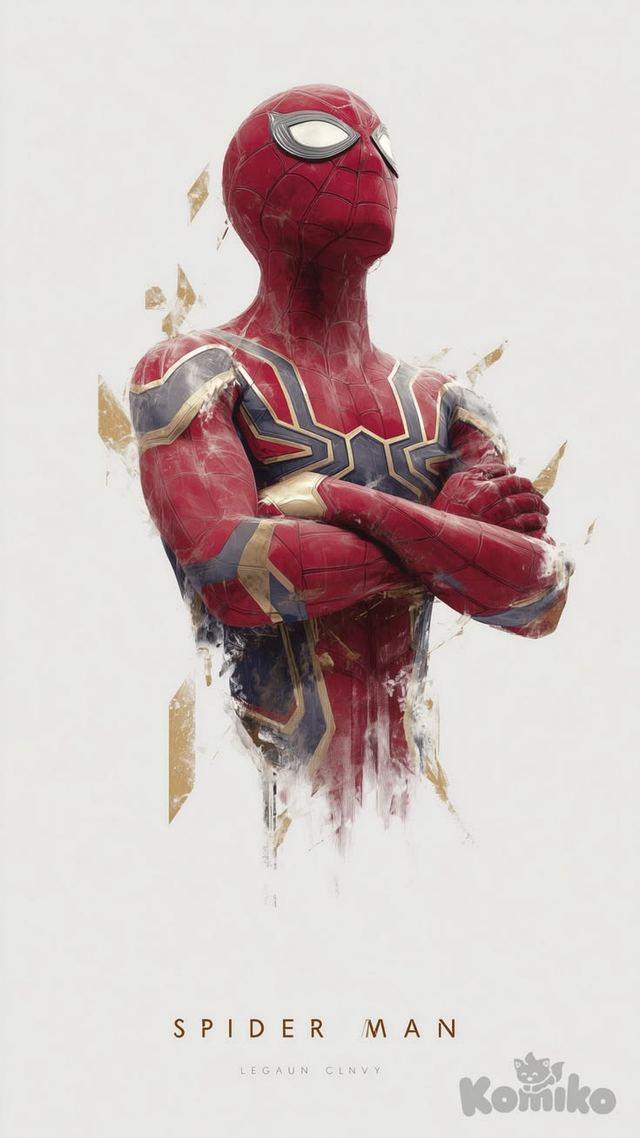
Catching up on the MCU? See where this fits on our full timeline.
Read next
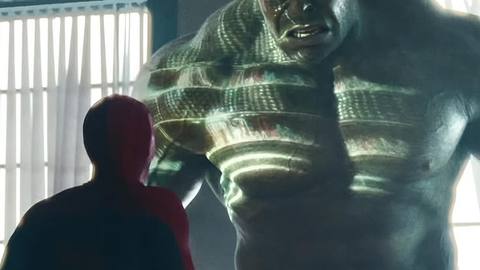
Smart Hulk Is Gone: The Savage Hulk Theory Behind Ruffalo's Return
Mark Ruffalo really is in Brand New Day. The rest — a broken merge, an unleashed Hulk, a teenager with no backup…
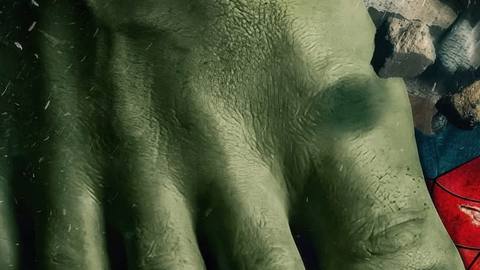
David vs Goliath: The Tank-Throw Shot Fans Want From Hulk vs Spider-Man
No leak, no scoop, no set report — just an image fans refuse to let go of. Hulk, a tank, a Manhattan street, and…
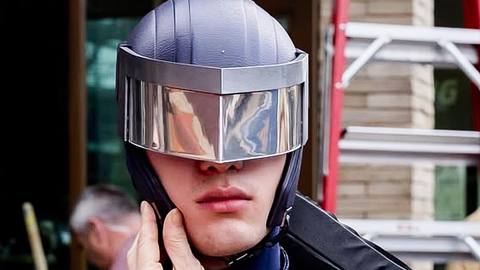
The Inhibitor Dilemma: Can Peter Parker Ever Turn Off His Spider-Gene Again?
Peter built his own Hulk-style inhibitor by studying Bruce Banner's tech. Here's exactly why it failed, and why he…