Man-Spider Evolved: The Terrifying Science Behind Peter's Black Eyes & Organic Webs
Grief cracked Peter's DNA wide open. Here's the science, the comics precedent, and why his own web-shooters turned against him in Brand New Day.
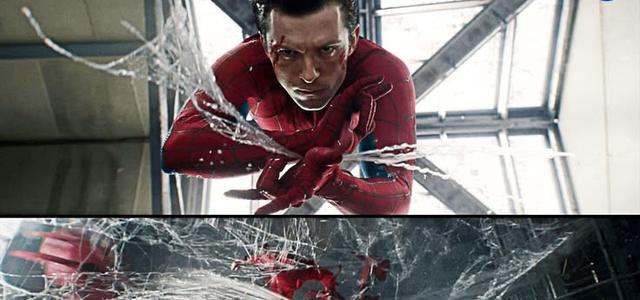
Peter Parker's body doesn't just gain new powers in Spider-Man: Brand New Day — it stages a full-scale mutiny against the tech he's relied on for years. By the time the credits roll, the kid who's spent three movies web-swinging on store-bought fluid and a wrist-mounted gadget has grown organic silk out of his own skin, blacked out his eyes twice, and effectively out-evolved his own gear.
If you've already read our full plot recap, you know the broad strokes: grief over MJ mid-kiss cracks something open, and Peter wakes up cocooned in webbing he never fired on purpose. What the film doesn't spell out in a lecture is the biology behind it — so let's dig into what's actually happening under Peter Parker's skin, why his own gear started treating him like a threat, and how closely all of it tracks with a very specific, very extreme comic book precedent.
Short version: this isn't a random power upgrade bolted on for a sequel hook. It's dormant code finally getting switched on — and Brand New Day frames it as being about as controllable as grief itself.
The Trigger: Why Grief Cracked His DNA Open
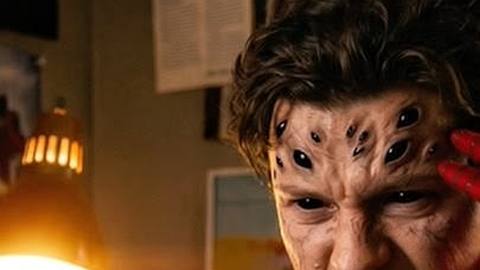
The transformation doesn't start with a bite, a serum, or a lab accident. It starts with heartbreak. Peter watches MJ — who has no memory of him, no idea who he even is — turn down a job and then kiss someone else at a party. That's the exact moment his body starts changing, on screen, in real time.
His own apartment tech spells out what's happening in blunt terms: his spider DNA is overwhelming his human DNA, and trauma is accelerating the process. It's not metaphorical. The film treats extreme emotional shock as a literal biological trigger, the same way real bodies dump adrenaline and cortisol under acute stress — except here, the flood switches on genetic material that was always dormant, not just adrenal glands.
He blacks out mid-swing and wakes up cocooned in webbing with a strand shooting straight out of his wrist — no shooter, no trigger, nothing mechanical involved. It's less a new power appearing and more a system that was always installed finally booting up without his permission.
The Symptoms, Decoded
A rooftop training sequence lays out exactly what Peter's dealing with, and it reads less like a superhero checklist and more like a diagnostic chart:
- Pitch-black eyes and full blackouts triggered by extreme stress
- Organic webbing that fires involuntarily and dwarfs his mechanical shooters in raw strength
- Sensory overload from hearing every sound in the city simultaneously
- A predatory, barely controllable rage that surfaces under pressure
| On-Screen Symptom | What We See | Closest Real-World Parallel |
|---|---|---|
| Black eyes / blackouts | Sclera and iris go fully black during extreme threat, followed by memory gaps | Extreme fight-or-flight override, where the amygdala hijacks conscious control |
| Involuntary organic webbing | Silk fires from his wrist with no device and no intent | An autonomic reflex, closer to a sneeze than a decision |
| Sensory overload | Every sound in the city hits him at once | Sensory processing overload seen in some trauma and neurodivergent conditions, dialed up to superhuman volume |
| Predatory rage | Barely controllable aggression under pressure | Stress-induced loss of impulse control, amplified by arachnid instinct rather than human reasoning |
Detective Jean DeWolfe sums up the practical fallout after the Scorpion fight, once Peter's eyes go black and he shatters a venomous stinger with his bare hands: she warns him she can't keep covering for him if he keeps fighting like a monster.
I can't keep cleaning this up if you're going to fight like a monster.
Mechanical Rejection: Why His Own Gear Turns on Him

This is where Brand New Day gets genuinely clever. It isn't just that Peter gains new organic abilities — his old tech starts actively rejecting him. His mechanical web-shooters glitch, misfire, and eventually detonate in an alley, and the film ties that directly to the same biological shift causing everything else. His body is no longer built to interface with the hardware he engineered for a fully human physiology.
Desperate for a fix, Peter visits Bruce Banner at Empire State University to study the wrist-mounted inhibitor that keeps the Hulk contained, hoping to reverse-engineer something similar for himself. Banner, who's lived with a version of this exact problem since well before he became Smart Hulk, warns Peter off tampering with his own biology. We covered how that homemade inhibitor actually works, and why it fails in detail — but the short version is that Banner's warning proves immediately correct. Peter's jury-rigged device overheats and takes his web-shooters out with it, a pretty clean metaphor for trying to engineer your way out of a problem your own cells have already decided to solve differently.
The Comics Precedent: The Other, Evolve or Die
Long-time readers will recognise the shape of all this immediately. Marvel Comics put Peter Parker through a similarly extreme metamorphosis in the storyline generally known as The Other: Evolve or Die, in which Spider-Man's powers evolve into something more purely arachnid — heightened senses, a more feral edge, abilities that go well beyond anything his gadgets could replicate — after Peter is pushed to the brink physically and emotionally.
Brand New Day borrows that storyline's core idea rather than any specific plot beat: that Spider-Man's powers were never a fixed, finished set. They were a starting point, waiting on the right trauma to unlock the next stage. The film swaps the comics' near-death illness for grief and loss, but the underlying thesis is the same — evolve, or don't survive what's coming. It's a smart needle to thread for a film that also wants to feel grounded in a very human loss story rather than a cosmic one.
So Is Peter Turning Into a Monster?
By the finale, Peter stops fighting the change entirely. Cornered by Hand operatives and an uncontrolled Hulk, with Jean Grey's powers loose and Frank Castle still under the entity's influence, he tears off his own inhibitor and lets the mutation finish. Steel-shredding skin, senses at full volume, and a web-nest large enough to drop every attacker in seconds — all in service of reaching Jean and calming her down through his own mind, not through force.
That's the film's real argument: the scariest version of this power isn't the one Peter can't control, it's the one he chooses to embrace on purpose to save someone. Whether that choice comes at a lasting cost is left open. We dig into whether his arachnid DNA could eventually kill him as a piece of pure speculation — Brand New Day never confirms where this transformation is heading, and anything about a future MCU timeline entry resolving it is a guess, not a spoiler. For now, all we know for certain is that the Peter Parker walking out of this film isn't fully human anymore, and he isn't pretending otherwise.
Frequently asked
Why did Peter Parker's eyes turn black in Brand New Day?
What caused Peter's organic webs to appear?
Why did Peter's mechanical web-shooters stop working?
Is Man-Spider based on the comics?
Did Bruce Banner help Peter with his transformation?
Will Peter Parker's arachnid DNA kill him in a future film?
Characters in this story
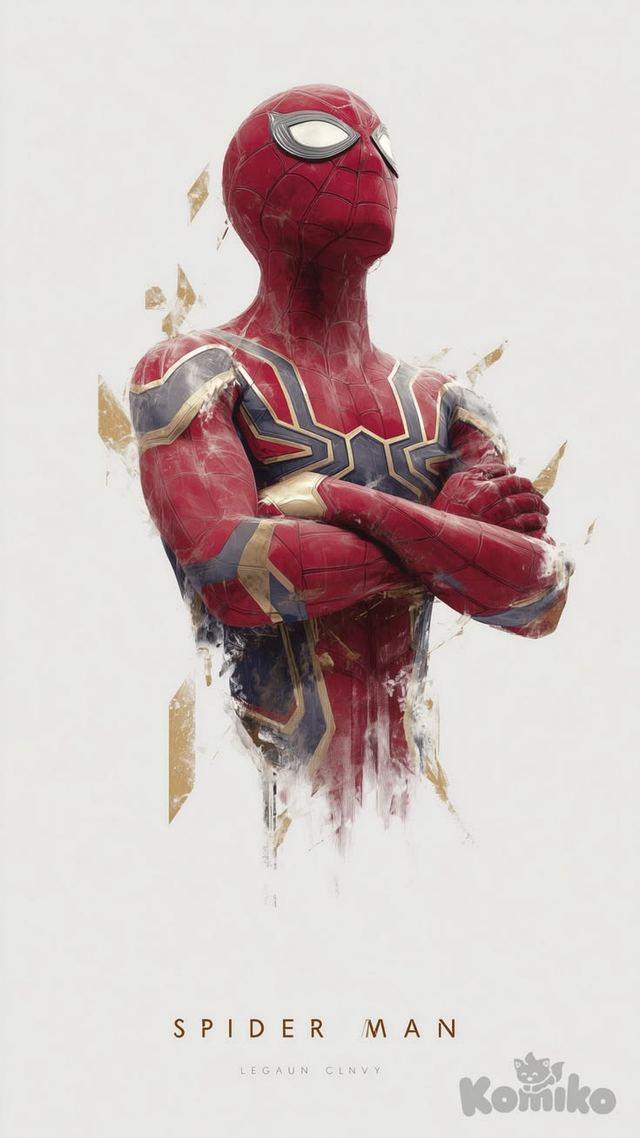
Spider-Man
Peter Benjamin Parker
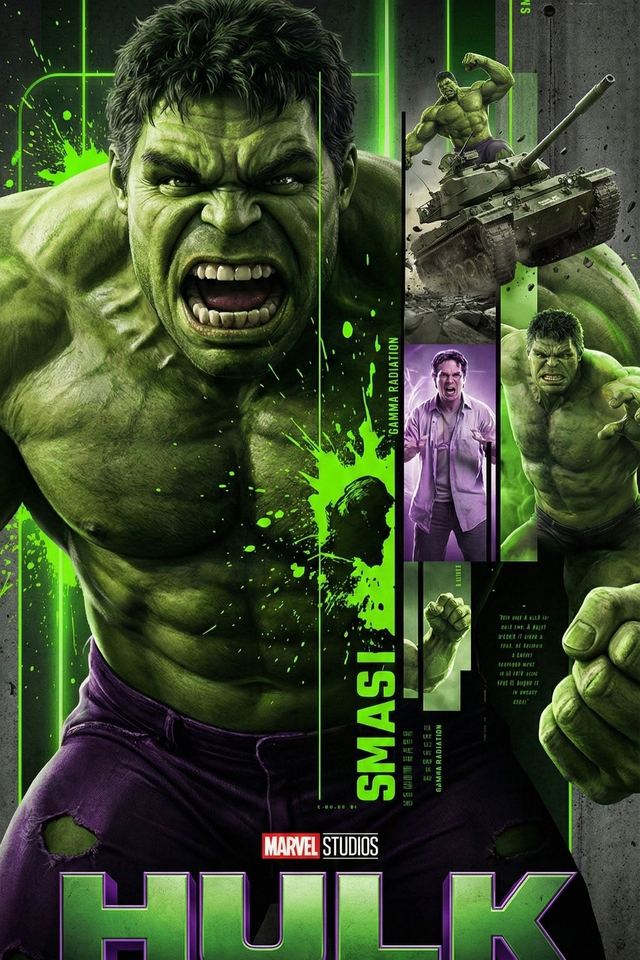
Hulk
Robert Bruce Banner
Catching up on the MCU? See where this fits on our full timeline.
Read next
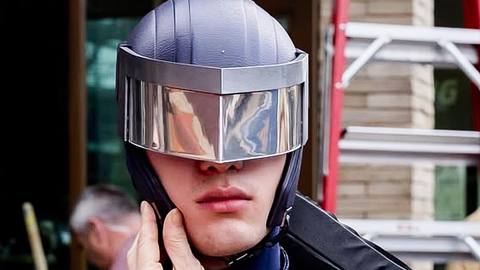
The Inhibitor Dilemma: Can Peter Parker Ever Turn Off His Spider-Gene Again?
Peter built his own Hulk-style inhibitor by studying Bruce Banner's tech. Here's exactly why it failed, and why he…
Will Peter Parker Die in the Next Chapter? The Cost of Losing His Human DNA
His spider-DNA is winning the fight for his body. If that transformation keeps going unchecked past Brand New Day…
Spider-Man: Brand New Day — Full Ending Explained (Major Spoilers)
Spider-Man: Brand New Day is finally in theaters, and the twist ending is a big one. Here's every beat explained…