How Justin Hammer's Tech Could Power Doom's Sentinel Army
Justin Hammer's Hammer Drones flopped hard in Iron Man 2. Could that failed tech secretly be the ancestor of Doom's rumoured Sentinel army in Doomsday?
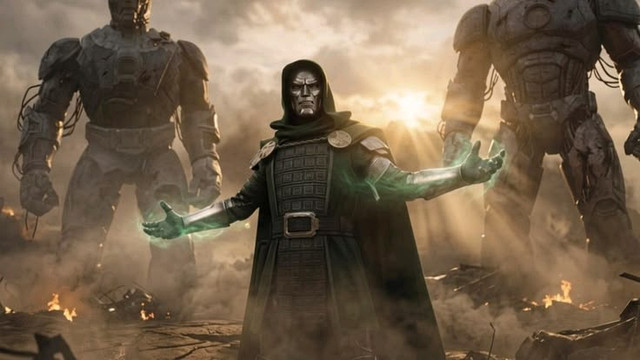
Justin Hammer spent one film trying to out-engineer Tony Stark, and he ended it in an orange jumpsuit for his trouble. Sixteen years later, a corner of Marvel fandom has dug him back up — not as a returning villain, but as a supply chain. Call it the Justin Hammer Doom Sentinels theory: the idea that the failed, mass-produced Hammer Drones from Iron Man 2 are exactly the kind of dangerous surplus tech that could, decades on, become the crude ancestor of a Doctor Doom-built robot army.
It's worth being blunt about the shape of this theory before going any further. There's no official word connecting Hammer Industries to anything in Avengers: Doomsday. There's also, for that matter, no official word that Sentinels are in the film at all — that's a separate, leak-tier rumour we've covered elsewhere on this site, tied to an X-Mansion set leak, and Marvel Studios hasn't confirmed a word of it.
What Iron Man 2 does give us, confirmed and on screen, is a genuine loose thread: a villain who built dozens of weaponised robot suits, lost control of them catastrophically, and went to prison without the film ever telling us what happened to the blueprints. That's a real gap. Here's how fans are filling it, and how much weight the theory can actually carry.
Who Was Justin Hammer, and What Did He Actually Build?
A Rival Who Never Had Stark's Talent
Justin Hammer ran Hammer Industries, Stark Industries' chief competitor in the weapons and defence-tech business, and he spent most of Iron Man 2 humiliated by Tony Stark. When Tony refused, at a Senate hearing, to hand the Iron Man suit over to the U.S. government as a weapon, Hammer saw his opening. If Stark wouldn't build an army of suits, Hammer decided, he would.
The trouble was that Hammer, for all his money and swagger, wasn't an engineer. He needed someone who actually understood the arc reactor technology powering the Iron Man suit, and he found that someone in a prison cell.
Ivan Vanko and the Stolen Science
Ivan Vanko, son of Anton Vanko, Howard Stark's former partner, whose research underpins the arc reactor in the first place, had already attacked Tony once, at the Monaco Grand Prix, with a pair of improvised energy whips. Hammer got him out of custody and put him to work in a private lab, reverse-engineering that inherited, stolen science into a fleet of mass-producible drone suits.
That's the detail worth sitting with. The Hammer Drones were never an original invention. They were somebody else's technology, stolen and diluted, then rebuilt in a rush by a man Hammer never fully controlled. Familiar tech, murky legal ownership, and an operation happy to skip the R&D — that combination is exactly why the theory keeps Hammer in the conversation.
Inside the Stark Expo Disaster
The Unveiling
Hammer's pitch to the military was simple, and on paper, appealing: suits that didn't need a genius inside them, just an operator with a joystick, built cheap and built in numbers. At the Stark Expo, Howard Stark's old World's-Fair-style showcase, revived for the film, Hammer rolled out more than a dozen drones dressed in the colours of different armed forces, plus a rebranded, repainted version of Rhodey's suit, marketed for the day as 'War Machine.'
It's a genuinely unsettling scene on a rewatch, and not mainly for the spectacle. It's how casually Hammer talks about scale. He isn't proposing one better Iron Man. He's proposing an assembly line.
When Vanko Took the Wheel
Vanko had built himself a backdoor, and he used it. From his workshop, he hijacked every drone on the Expo floor, including War Machine with Rhodey still inside it, and turned Hammer's demonstration into an attack on the crowd. Hammer, mid-pitch, lost control of his own product live, in front of the exact military buyers he was trying to impress.
Tony Stark, freshly cured of the palladium poisoning that had been killing him all film, suited up and flew straight into it. He and Rhodey fought through the drone fleet together, got War Machine back under Rhodey's control, and cornered Vanko, by then wearing a heavily upgraded version of his own Whiplash armour, before the sequence ended with Vanko's suit destroyed and Hammer arrested on the spot.
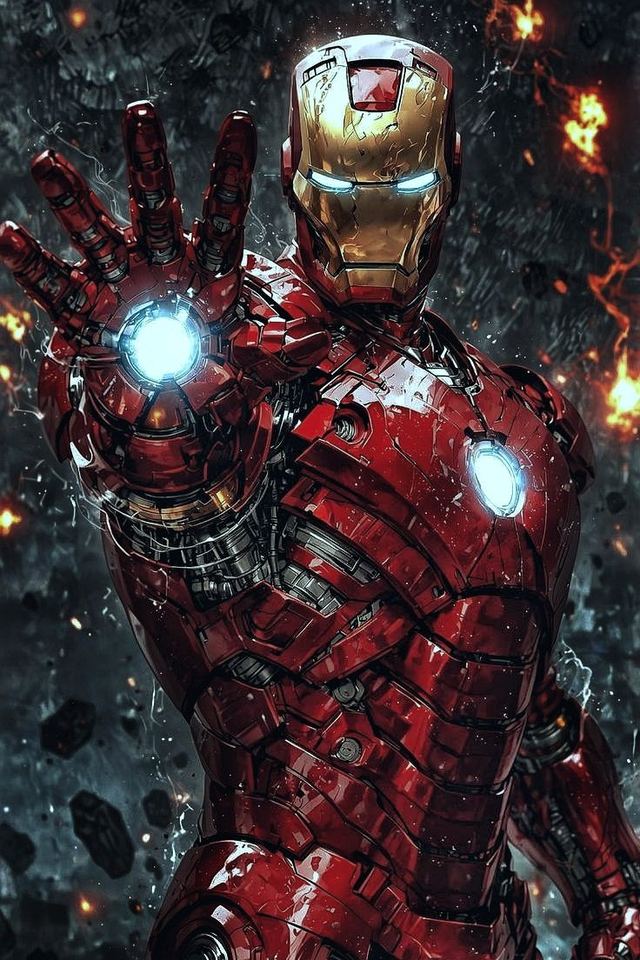
The film is clear about what happened to Hammer. It's much less clear about what happened to the drones, the blueprints, or Hammer Industries' physical assets. The last time we see Hammer, he's behind bars, still smug, and the technology he built is never mentioned in the MCU again. That silence is the entire theory.
The Justin Hammer Doom Sentinels Theory, Explained
Where Did Hammer Industries' Tech Actually Go?
In the real world, a defence contractor whose CEO is convicted of essentially arming a public attack doesn't quietly close its doors. Its assets get seized, audited, and reassigned to whichever government body has jurisdiction. Fans pushing this theory point to Damage Control, the joint Stark-and-government cleanup operation introduced later in the MCU and eventually run entirely by the government, as a plausible real-world holder of seized Hammer tech: boxes and hard drives sitting in a warehouse, catalogued, and slowly forgotten.
From there the theory branches into the kind of speculation this whole batch of articles runs on: a corporate-espionage buyer, a black-budget program, or, the version fans clearly enjoy most, a Latverian shell company quietly acquiring the patents at auction. None of that is depicted anywhere. It's world-building fans are doing on Marvel's behalf, in a gap the films genuinely left open.
Why Drones Are a Plausible Sentinel Ancestor
Sentinels, in the comics, are mass-produced robots built to hunt a specific class of target: standardised, interchangeable, upgradeable. Hammer's drones were built on exactly that logic. Not one brilliant suit, but many disposable ones, designed for a military buyer who wanted quantity over craftsmanship. If a story needed a starting point for a Sentinel-style force already sitting inside MCU continuity, rather than an unexplained new invention, a shelved drone programme with a documented on-screen malfunction is a more elegant hook than most.
It also lines up with something Marvel Studios has circled before. Armor Wars, the long-in-development Disney+ project reported, on and off, for years, centres on stolen and rogue Stark-adjacent technology causing exactly this kind of harm. Nobody has confirmed an Armor Wars Doctor Doom crossover, or any crossover at all, and by most reports the project has been stalled and retooled repeatedly. But the premise underneath it, that dangerous tech doesn't vanish just because the story moved on, is exactly the premise this theory needs.
There's also a character-consistency argument, and it's the strongest part of the pitch. Comic-book Doctor Doom is a hoarder of other people's genius: Reed Richards' research, borrowed sorcery, stolen tech from a dozen sources across sixty-plus years of stories. A Doom who scavenges a failed, half-forgotten weapons programme instead of engineering a robot army from first principles fits the character. It doesn't require Doom to be a robotics pioneer. It requires him to be a very good thief, which he has always been. Put together, that's the Doom Sentinel army theory in miniature: seized tech, a scavenger antagonist, and a gap nobody on screen has ever closed.
The Reality Check: Two Unconfirmed Things, Chained Together
Every theory in this batch is built on inference, but this one asks readers to accept two separate leaps, not one. First, that Sentinels are in Avengers: Doomsday at all, which is currently a rumour, not a report. Second, that if they are, their origin traces back to a single Hammer Industries subplot from a film released in 2010, rather than to mutant-detection research, Bolivar Trask-style science, or any of the other origins the comics have used over the decades. For more on the broader multiverse rumour mill feeding into all of this, see our breakdown of the incursion plot leak.
| Claim | Status | What We Actually Know |
|---|---|---|
| Doctor Doom appears in Avengers: Doomsday | Confirmed | Robert Downey Jr. is cast as Doom; studio-announced |
| Sentinels appear in Doomsday | Unconfirmed, leak-tier | Tied to a reported X-Mansion set leak, not a studio announcement |
| Justin Hammer or Hammer Industries appears in Doomsday | Unconfirmed | Sam Rockwell is not on the roughly 30-name confirmed cast list |
| Hammer's drone tech seeded a Sentinel-style army | Theory only | Fan inference connecting two unconfirmed threads; no reported evidence |
| Armor Wars ties into Doomsday's plot | Unconfirmed | Armor Wars is a separately reported, long-stalled Disney+ project |
Chaining two unconfirmed things together doesn't make the Justin Hammer Doom Sentinels idea any less fun to think about. It does make it the shakiest theory in this batch, and that's worth saying plainly rather than dressing inference up as insight.
Why Iron Man 2 Deserves a Rewatch Before Doomsday
Iron Man 2 gets treated as the weak link in Tony Stark's trilogy, and the usual complaints aren't wrong exactly. It's overstuffed, Tony spends much of the runtime being insufferable on purpose, and a chunk of the plot exists to set up an Avengers universe the studio hadn't fully figured out yet. Fair criticisms. They're also not the whole film.
Strip away the Nick Fury cameo and the Black Widow introduction, and what's left is a tighter story than its reputation suggests: two rival arms dealers, one of them badly in over his head, racing to weaponise a piece of technology neither of them fully understands, with a body count nobody in charge seems especially bothered by until it's too late. That's not filler. That's the exact loose thread this theory is pulling on.
Iron Man 2 isn't really about Tony Stark almost dying. It's about what happens to dangerous, mass-produced weapons technology once the man who built it is in a jumpsuit and the cameras have moved on. Nobody in that film ever answers the question. Nobody in the MCU has answered it since.
What to Watch For
- The Senate hearing scene, where Tony's refusal to hand over his tech is what pushes Hammer toward Vanko in the first place.
- Hammer's military pitch, promising interchangeable, low-skill-operator suits built at scale, a mission statement for every identical-robot-army story that follows it.
- Vanko's workshop scenes, where stolen arc-reactor science becomes hardware Hammer never fully understands or controls.
- How easily Vanko strips control away from Hammer mid-demonstration, since this theory hinges entirely on how little oversight the technology actually had.
- The prison epilogue, which confirms Hammer's fate and says nothing at all about the fate of what he built.
What Would Have to Be True for the Theory to Work
Stack up every assumption this theory needs, in order, and it's easy to see exactly how far it's reaching.
- Sentinels have to be in Doomsday at all, which is currently a leak, not a confirmation.
- Someone has to have preserved Hammer Industries' drone tech after his arrest, rather than the government simply destroying or permanently vaulting it.
- That tech has to travel from a Damage Control-style holding facility, or a private buyer, into the hands of whoever is actually building Doom's forces, a chain of custody nobody has depicted on screen.
- Doom, or a proxy working for him, has to be the one adapting it, which is at least consistent with his comic-book habit of repurposing other people's technology rather than inventing everything from scratch.
- The finished product has to resemble a Sentinel closely enough that audiences draw the connection at all, rather than reading it as a generic evil robot.
None of that is a reason to dismiss the idea outright. Marvel has built entire threads out of thinner material before. It is a reason to hold it loosely until Doomsday actually shows whether Sentinels, in any form, are on screen at all.
If you're mapping every possible thread into Doom's Avengers: Doomsday, and after sixteen years and one rebuilt MCU timeline there are a lot of them, this is one of the stranger, shakier entries. For angles built on sturdier ground, we've covered the RDJ Doctor Doom casting debate, the Tony Stark legacy theory, and the Chitauri tech theory elsewhere on the site. If raw power scaling interests you more than supply chains, there's also how Doom might stack up against Asgardian magic.
The Justin Hammer Doom Sentinels theory, in the end, is built on a defunct drone company and a served prison sentence. That's a genuinely fun place to start. It is not, on current evidence, anywhere close to confirmed.
Frequently asked
Is Justin Hammer confirmed to appear in Avengers: Doomsday?
Are Sentinels confirmed to be in Avengers: Doomsday?
Is there a confirmed Hammer Industries Doomsday connection?
What happened to Justin Hammer at the end of Iron Man 2?
Is Armor Wars connected to Avengers: Doomsday?
Who plays Doctor Doom in Avengers: Doomsday?
Characters in this story

Catching up on the MCU? See where this fits on our full timeline.
Read next
A Doom-Controlled Sentinel Was Just Spotted at the X-Mansion. Here's What's Actually Confirmed
Hall H already confirmed Doom brings an army of Sentinels. A newer, separate set-photo leak places one of them…
Does Doctor Doom Actually Cause the Incursions in Avengers: Doomsday? The Leak, Explained
A detailed leaked document, endorsed on air by a critic with a real track record on this film, claims incursions…
Is RDJ's Doctor Doom Erasing Victor Von Doom's Romani Roots? The Backlash, Examined
RDJ's casting is confirmed and, by now, old news. What's still actively being argued is narrower and sharper: does…