Why Loki's Chitauri Invasion Was Doom's First Catalyst
Loki's invasion left Manhattan buried in alien tech. One theory says a scrap of it eventually reached Latveria — and gave Doctor Doom a serious head start.
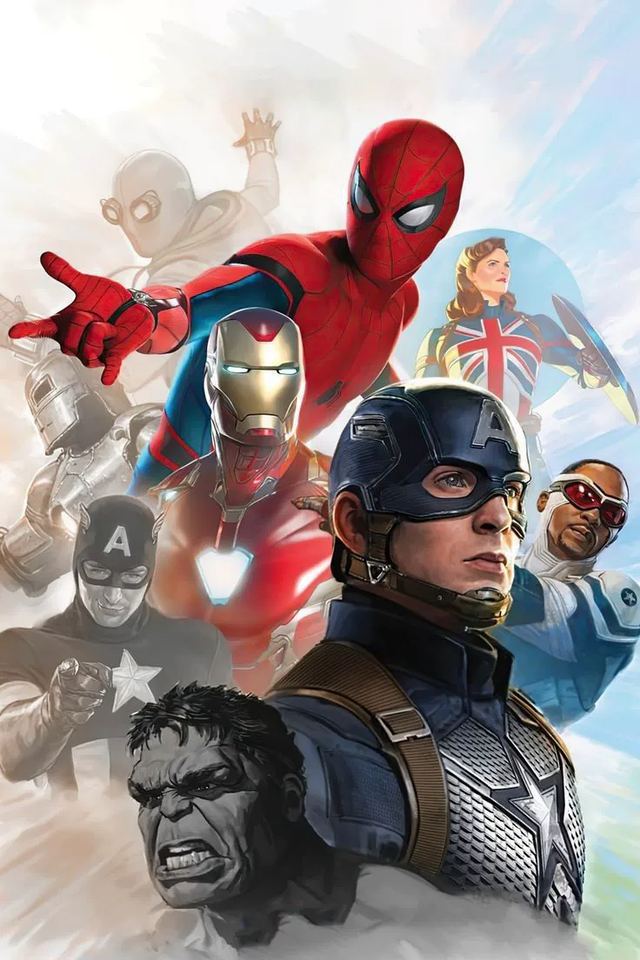
Every rewatch-before-Doomsday theory needs one real, on-screen hook to hang itself on, and the Chitauri Doctor Doom idea has a decent one: The Avengers ends with Manhattan buried under alien wreckage that the MCU has spent fourteen years mostly declining to discuss. Nobody has ever properly accounted for where all that Chitauri technology went. That silence is exactly the kind of loose thread a ten-film, three-universe crossover like Avengers: Doomsday is built to pull on, and fans have been pulling on it hard.
Here's the theory, compressed: some of that scavenged Chitauri hardware — and we know for a fact some of it got scavenged — passed through enough black-market hands to eventually land somewhere nobody was watching. Latveria. The idea is that a scrap of genuinely otherworldly, dimension-crossing alien tech gave Doctor Doom his first real head start on understanding how to move between universes, long before he became the Avengers' problem. It's a good story. It's also, to be completely upfront, mostly invented — two real data points connected by a long, speculative bridge.
Which is exactly why it's worth putting The Avengers back on before December. Not because it secretly explains Doctor Doom's origin — it doesn't, not anywhere on screen — but because it's a film absolutely stuffed with 'wait, what happened to that?' world-building the MCU still hasn't closed out. Let's start with what's actually real.
The Battle of New York, Replayed in Forensic Detail
The Portal Over Stark Tower
The mechanics are worth remembering precisely, because the theory depends on them. Loki, wielding a sceptre powered by the Tesseract, forces Erik Selvig's modified device on top of Stark Tower to open a portal directly above Manhattan — a hole punched straight through the sky into deep space, where a Chitauri fleet is waiting.
That portal is the whole ball game. It isn't a metaphor dressed up for drama — within the story, it's a literal, stable connection between Earth and another location entirely, held open by Loki's sceptre and only closable from the ground. If you're looking for the MCU's first serious depiction of controlled travel between two separate points in the universe, this is it, nine years before anyone was using the word 'multiverse' out loud.
The Leviathans, and Everything They Left Behind
Through that portal comes the actual invasion: waves of Chitauri foot soldiers on flying sleds, and then the Leviathans — the massive, part-mechanical, part-organic serpents that plough through city blocks and unload troops from openings along their flanks. They are not subtle. One ends up draped across a Manhattan building in the film's closing aerial shot, dead and enormous, just left there.
That image matters more than it gets credit for. The Avengers wins the battle and then simply cuts away, leaving a city block genuinely covered in wrecked alien warships, dead Chitauri and hardware that had never existed on Earth before that Tuesday. The film never sends anyone back to explain the clean-up. That's not really a plot hole — it's just an open door the MCU left standing for over a decade.
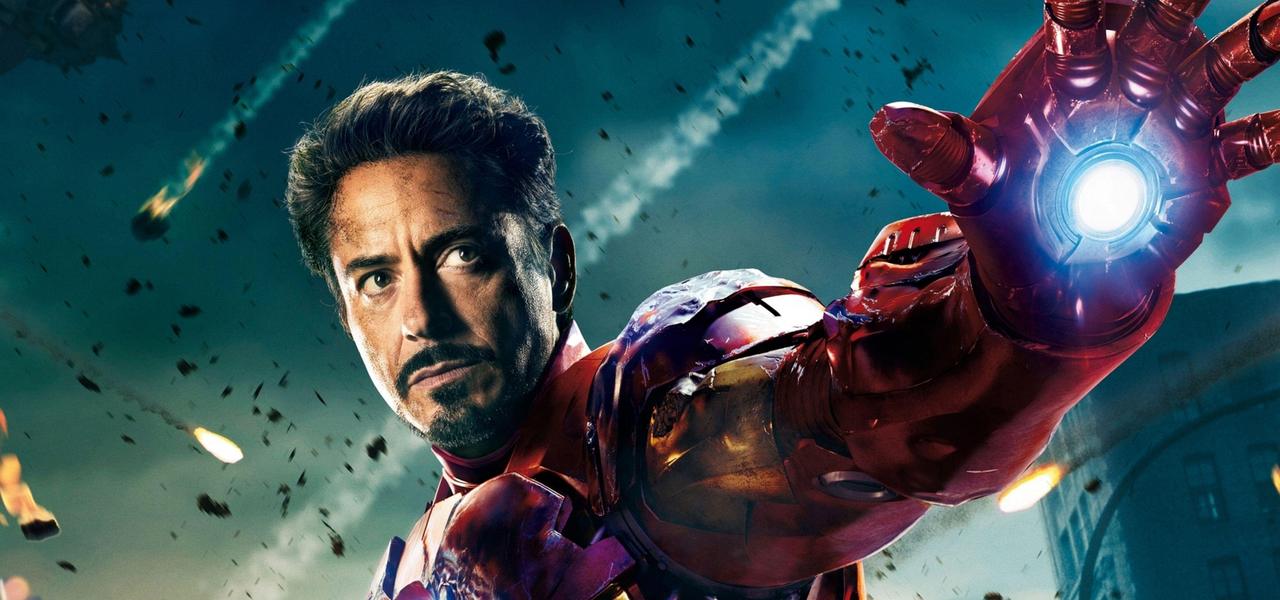
The Nuke Tony Flew Through the Portal
The endgame of the battle is the part everyone remembers correctly: the World Security Council, watching Manhattan get overrun, orders a nuclear strike on the city rather than risk the Chitauri pushing further inland. Tony Stark intercepts the missile, redirects it through Loki's portal into the Chitauri mothership above, and detonates it there instead — killing the mothership, which instantly drops every Chitauri soldier and Leviathan still fighting below. Natasha Romanoff closes the portal seconds after Tony makes it back through, with essentially no room to spare.
Loki: 'I have an army.' Tony Stark: 'We have a Hulk.'
It's the line everyone quotes, and it's worth remembering why it lands: the whole battle is a story about wildly mismatched scale — one god-king's army against a handful of people who happened to be in the room. That mismatch is arguably the same shape Avengers: Doomsday's own 'three distinct universes' premise is working with: impossible odds, dealt with by whoever happens to be standing there.
- Loki opens a portal above Stark Tower using the Tesseract-powered sceptre.
- Chitauri soldiers and Leviathans pour through and engage the assembled Avengers across Midtown Manhattan.
- The World Security Council orders a nuclear missile fired at the city.
- Tony Stark intercepts the missile and flies it through the portal into the Chitauri mothership.
- The mothership's destruction disables the Chitauri army; Natasha Romanoff closes the portal moments later.
- Manhattan is left with alien wreckage the film never shows being fully cleared — the gap the rest of this theory tries to fill.
The Real Precedent: Vulture Turned the Wreckage Into a Business
Adrian Toomes' Salvage Operation
This is where the theory stops being purely speculative, because Spider-Man: Homecoming actually shows the next step. The film opens in the immediate aftermath of the Battle of New York, with contractor Adrian Toomes and his crew hired to help with the clean-up — real, paid, government-adjacent salvage work, hauling out exactly the kind of Chitauri debris the first film left behind.
It doesn't last. A newly formed federal outfit called Damage Control, backed by Stark Industries and the U.S. government, takes over jurisdiction on clean-up involving alien and Avengers-related material, and Toomes' company gets frozen out of the contract that was supposed to make him rich. He doesn't hand back the equipment his crew has already pulled out of the rubble.
From Clean-Up Crew to Arms Dealer
Eight years pass. By the time Homecoming picks the story back up, Toomes has quietly built a black-market operation around what his crew salvaged — Chitauri energy tech and alien alloys no ordinary supplier could touch — engineering and selling illegal weapons to criminals across the city, and building his own Vulture flight suit out of the same hardware.
None of that is a theory. It's the confirmed, on-screen precedent the entire Chitauri Doctor Doom idea leans on: genuinely otherworldly technology from the Battle of New York did leak out of official channels, did get sold, and did end up powering things Nick Fury's SHIELD never signed off on. That's a real MCU fact. Everything past this point is where the theory starts inventing.
The Chitauri Doctor Doom Theory: Where Fact Ends and Speculation Begins
What We Actually Know
Strip the theory down to what's verifiable and it's a short list. Chitauri technology existed, was scattered across Manhattan, and at least some of it entered a black market well-organised enough to arm street-level criminals for the better part of a decade. Separately, Robert Downey Jr. is playing Doctor Doom in Avengers: Doomsday, not Tony Stark, and Marvel has released essentially nothing about this version of Victor von Doom's backstory — a casting choice that's generated its own arguments, including a running debate about what it means for Tony Stark's legacy.
That's it. That's the whole confirmed record. No film, show, tie-in comic or Marvel Studios statement has ever put Doctor Doom, Latveria, or Victor von Doom's origin anywhere near a Chitauri artefact.
The Leap to Latveria
The theory's logic runs like this: if Toomes' operation could quietly arm criminals in Queens for eight straight years without SHIELD noticing, a black market that porous could plausibly move rarer, more valuable pieces even further afield — to private collectors, to other arms dealers, eventually to buyers with the money and motive to want something nobody else on Earth had. A secretive, tech-and-magic-obsessed monarch running his own country with essentially no oversight is, structurally, exactly the kind of buyer that black market was built for. It's not the only tech-to-Doom pitch doing the rounds either — a parallel theory built around Justin Hammer's leftover weapons tech makes a similar bet, just with a different supplier.
Framed as a Chitauri tech Doom origin story, it's appealing precisely because Chitauri hardware is the one alien technology the MCU has explicitly tied to dimensional manipulation — it's the material a working portal actually ran through, not just space-age weaponry. Some fans have taken to calling it the Leviathan Doom theory, on the logic that if anything survived that battle intact enough to reverse-engineer, it would be salvage pulled from something as massive as a downed Leviathan. It's a clean enough idea. It is also, in its entirety, invented for this article and the fan discussion it's drawing on — there is no on-screen evidence connecting Chitauri salvage to Doom, Latveria, or dimension-hopping technology of any kind.
Confirmed vs. Theory: A Reality Check
It's easy for a theory this satisfying to start feeling like reporting, so here's the split laid out plainly. Nothing here confirms the Chitauri Doctor Doom theory — it confirms the two real data points fans use to build it. Think of it as one Avengers 2012 Doomsday theory among several doing the rounds this year, and like most of them, it's got a solid true half and a completely invented half.
| Claim | Status |
|---|---|
| Loki opens a portal over Manhattan and a Chitauri army invades | Confirmed — on screen, The Avengers (2012) |
| Tony Stark flies a nuke through the portal to destroy the Chitauri mothership | Confirmed — on screen, The Avengers (2012) |
| Adrian Toomes salvages Chitauri wreckage and later sells weapons built from it | Confirmed — on screen, Spider-Man: Homecoming (2017) |
| Damage Control was formed to control alien and Avengers-incident debris | Confirmed — established on screen, Spider-Man: Homecoming (2017) |
| Robert Downey Jr. plays Doctor Doom, not Tony Stark, in Avengers: Doomsday | Confirmed casting |
| Some salvaged Chitauri tech eventually reached Latveria | Unconfirmed — invented for this theory |
| Doctor Doom used Chitauri tech to learn dimension-hopping | Unconfirmed — invented for this theory |
Notice how the table breaks: everything with a release date and a runtime is confirmed. Everything involving Latveria is theory. That's not a knock on the idea — it's just an honest map of where the evidence actually stops. If you'd rather weigh Doom's magic side against all this tech speculation, the power-scaling comparison against Asgardian magic is the companion read.
- What happened to the Chitauri hardware SHIELD and Damage Control actually managed to confiscate, rather than what leaked to Toomes.
- Whether any of it was studied, weaponised or moved off-world by a government agency the MCU has never revisited.
- Why an eight-year black-market arms operation running on alien technology went unnoticed by every intelligence agency in the MCU.
- Whether Avengers: Doomsday, juggling heroes from three distinct universes, will bother explaining this Doctor Doom's origin at all.
Our MCU timeline has the full chronology if you want to see exactly how much happened between 2012 and Toomes' arrest in 2017 — and how little of it touches Chitauri clean-up directly.
Why The Avengers (2012) Is Worth Rewatching Before Doomsday
The Loose Thread the MCU Never Tied Off
Set the Doom theory aside completely and The Avengers still holds up as a rewatch, partly because of how much it leaves hanging. A government body seriously considers nuking an American city. A weapon powerful enough to end that debate gets flown through a portal by one man in a suit, and the film just moves on to shawarma. There's no scene where anyone counts the wreckage, catalogues the tech, or explains who gets custody of a dead Leviathan.
Compare that to how the MCU usually handles loose ends now — post-credits scenes, Disney+ tie-ins, a Damage Control mention here and there — and it's obvious how unusual that silence was back in 2012. The film trusted audiences to accept that a city fought off an alien invasion and moved on, and mostly, we did. Reported plot details around Doomsday's incursion structure suggest the Russos are now in the business of reopening exactly these kinds of unclosed doors.
What to Watch For This Time
On a rewatch, pay attention to the wide shots in the third act — how much visibly alien material is just sitting in the street once the fighting stops. Watch how casually Fury's SHIELD treats the clean-up as background noise rather than a five-alarm containment problem. And watch the portal sequence itself slowly, because whatever Doomsday does with 'three distinct universes,' this is still the MCU's cleanest on-screen depiction of two locations being forced open into one.
None of that confirms a single frame of the Chitauri Doctor Doom theory — which is, in the end, roughly two-thirds real. But it's a reminder that The Avengers was never as tidy a story as fourteen years of familiarity make it feel, and the reported rewrites on Doomsday's own script suggest the Russos know exactly how much unfinished business is still sitting in this franchise's older corners. Whether Victor von Doom turns out to be connected to any of it is, for now, entirely a fan theory — one more reason to rewatch with sharper eyes before Avengers: Doomsday arrives on 18 December.
Frequently asked
Is the Chitauri Doctor Doom theory confirmed by Marvel Studios?
What happened to the Chitauri technology after the Battle of New York?
Does Spider-Man: Homecoming really show Chitauri tech being sold illegally?
Who plays Doctor Doom in Avengers: Doomsday?
Why do some fans connect the Chitauri invasion to Doctor Doom?
When does Avengers: Doomsday come out?
Characters in this story
Doctor Doom
Victor von Doom
Iron Man
Anthony Edward Stark
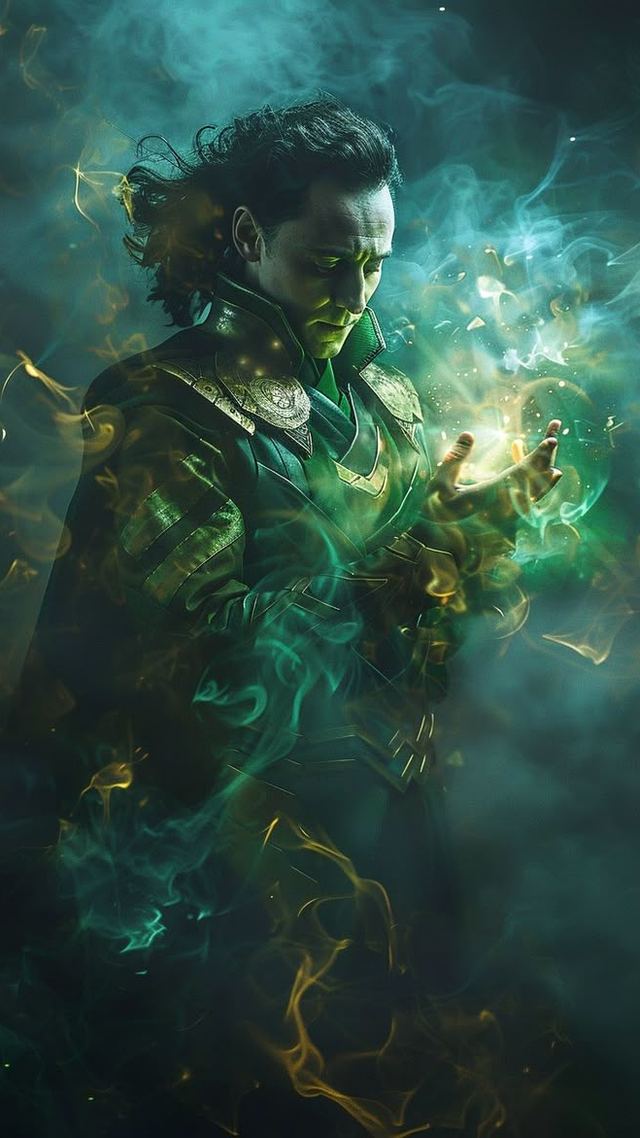
Loki
Loki Laufeyson
Vulture
Adrian Toomes
Nick Fury
Nicholas Joseph Fury
Catching up on the MCU? See where this fits on our full timeline.
Read next
Why RDJ's Doctor Doom Needs to Acknowledge Tony Stark's Legacy
Every Doctor Doom fan theory traces back to one cave in Afghanistan. Here's why RDJ's version of the villain might…
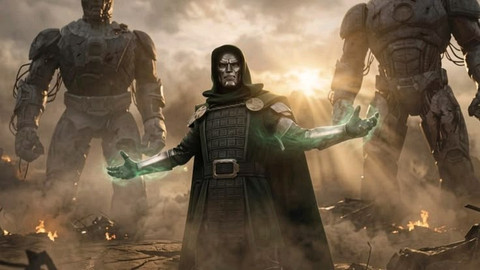
How Justin Hammer's Tech Could Power Doom's Sentinel Army
Justin Hammer's Hammer Drones flopped hard in Iron Man 2. Could that failed tech secretly be the ancestor of Doom's…
Will Asgardian Magic be the Only Thing That Can Pierce Doom's Armor?
Doom's armour has shrugged off bullets, blasts, and Reed Richards for six decades. Comics precedent says enchanted…