Did Peter Parker Actually Survive the Sniper Shot? His Evolved Biology Explained
Frank Castle's bullet hits Peter square in the chest. Here's the biology behind why Spider-Man walked away instead of dying on that rooftop.
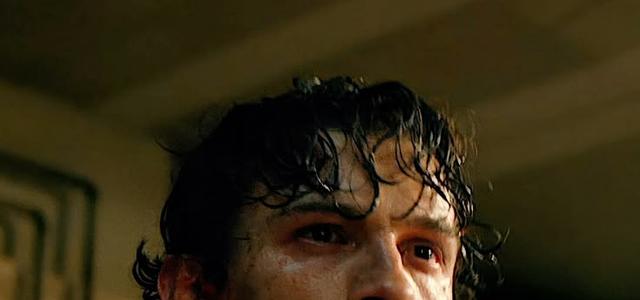
Did Peter Parker survive the sniper shot in Brand New Day? Yes — but the film goes out of its way to make sure that answer isn't obvious in the moment. When Frank Castle puts a round meant for Jean Grey into Peter's chest instead, the ending lingers on him bleeding out rather than cutting away, and for a solid stretch of screen time it genuinely looks like the movie is willing to kill its hero.
It doesn't. Peter survives because two separate things happen to him at once, back to back, in the space of maybe ninety seconds of story time. Jean's telepathy buys him time he shouldn't have had, and his own increasingly non-human biology does the actual work of closing the wound. Neither one alone gets him off that rooftop.
What Actually Happens, Beat by Beat
Context matters here. Peter has just torn off the wrist inhibitor he built to suppress his accelerating spider mutation, fully accepting what he's becoming in order to survive Jean's telepathically-triggered assault and an uncontrolled Hulk. He fights his way to her, opens his mind, and shows her everything he's personally lost — MJ, the life he had, all of it. It works. Jean calms down completely.
That's the moment Frank Castle, still not entirely clear of the entity's lingering influence, fires. The shot is aimed at Jean's chest. Peter gets there first and takes it instead.
- Peter opens his mind to Jean and defuses her rage — the emotional climax lands before the shot is fired, not after.
- Frank fires at Jean; Peter intercepts the round meant for her.
- Jean, still telepathically linked to Peter, keeps him conscious and stable rather than letting him go into immediate shock.
- Peter's own healing factor — the same one driving his spider-DNA transformation all film — closes the wound.
- Frank, partially free of the entity's control, carries Peter to safety and later covers for him at the hospital, wearing the suit himself.
The Two-Part Survival Mechanism, Explained
The film is careful to present this as two distinct systems working together, not one lucky break. Take away either one and Peter almost certainly dies on that rooftop. The first is Jean. Her telepathic link to Peter, established moments earlier when he opened his own mind to her, doesn't just evaporate the instant the bullet lands. The film implies — without spelling out the exact mechanics — that she's able to hold his consciousness together, dulling the shock response that would otherwise kill a human within minutes of a chest wound like that. It's a stopgap, not a cure. It buys time.
The second is Peter. By this point in the film he has ripped off his homemade inhibitor and let his spider mutation run unchecked for the first time. That transformation has already given him organic webbing, steel-shredding skin, and senses beyond human range. It stands to reason — and this is the film's own internal logic, not outside speculation — that the same accelerated cellular process reshaping the rest of his body would also accelerate how fast his body repairs itself. A healing factor that can rebuild a person from the inside is exactly the kind of thing you'd expect that mutation to produce once it's no longer being suppressed.
| Factor | Role in the Save | Confirmed or Inferred |
|---|---|---|
| Jean's telepathy | Keeps Peter conscious and stable immediately after impact | Confirmed on screen |
| Unshackled spider mutation | Provides the underlying accelerated healing capability | Confirmed on screen |
| Healing factor closing the wound | Direct cause of physical survival | Confirmed on screen |
| Exact biological mechanism of the healing | How fast, how it prevents blood loss, long-term effects | Our extrapolation — not stated by the film |
Worth being precise about where the confirmed detail ends. The movie shows the shot, shows Jean's telepathic support, and shows Peter's wound close under his own power well enough that he's on his feet — battered but breathing — by the time he needs to slip out to see MJ. It does not narrate the cellular mechanics. Any talk of exactly how fast his blood clots or what this means for future injuries is reasonable extrapolation from what the film establishes about his arachnid DNA, not a line of dialogue anyone actually says.
Frank Castle's Cover Story at the Hospital
The aftermath is where Frank Castle's arc quietly resolves itself. Having spent most of the film as an unwilling weapon for the entity possessing him, Frank is lucid enough after the shot to understand exactly what he's done and who saved him from doing worse. He carries Peter out. At the hospital, Frank goes further than just delivering him. He puts on the Spider-Man suit himself and stands at the window, letting the public — and anyone watching for Spider-Man — believe the hero is exactly where he's supposed to be, recovering in costume. It buys Peter the one thing he actually needs: privacy to slip out unnoticed and find MJ.
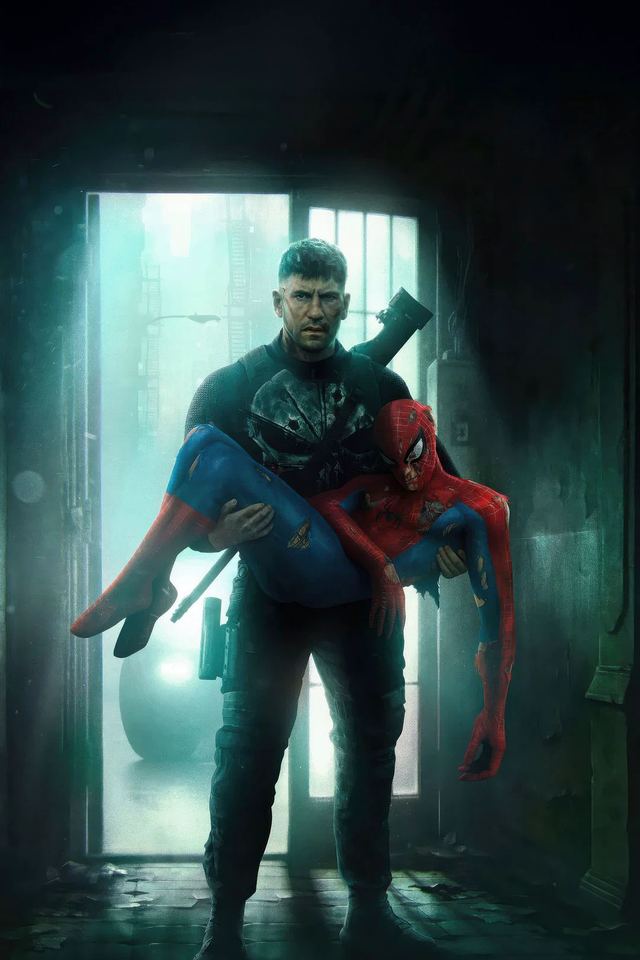
It's a small gesture with a lot of weight behind it. Frank spent the whole movie as a blunt instrument for something he couldn't control. Standing guard in a suit that isn't his, covering for the kid he almost killed, is the closest thing the film gives him to redemption without ever using that word.
Why This Reads as a Cliffhanger, Not a Resolution
Brand New Day never lets the audience relax into "he's fine." The framing — the blood pool, the drawn-out silence, the cut to Frank carrying him rather than a triumphant recovery — is deliberately built to sit with you as unresolved tension before the film shows its hand. That's a storytelling choice, and it works precisely because the movie has spent two hours making Peter's body increasingly unpredictable. Mechanical gear rejects him. A homemade inhibitor blows up in his face. There's no guarantee built into the story that his biology behaves the way anyone — Peter included — expects it to.
His spider DNA is overwhelming his human DNA. Every device he's built to control it has failed. The healing factor is the first time that transformation actually saves him instead of costing him something.
What It Sets Up Going Forward
The survival matters beyond the immediate scene. It confirms, on screen, that Peter's post-inhibitor body can absorb damage that would be instantly fatal to an ordinary person, which reframes every future threat against him — and raises the inverse question of what, if anything, actually could kill him now. It also cements Jean's telepathic bond with Peter as something more than a one-scene plot device, since it's directly responsible for keeping him alive long enough for his own biology to catch up. And it closes Frank's loop for this film, at least for now, tying his guilt over the Scorpion transport shooting back to an act of protection rather than harm. None of it is spelled out with a text crawl. It's shown, then left for the audience to sit with, which is very much the house style of Brand New Day as a whole — and consistent with the wider MCU timeline headed into Avengers: Doomsday.
For the full chain of events around this scene — what leads into it and what immediately follows before the credits roll — the complete ending recap lays out the whole sequence in order.
Frequently asked
Does Peter Parker die in Spider-Man: Brand New Day?
How does Peter survive being shot in Brand New Day?
Why does Frank Castle shoot Peter instead of Jean Grey?
What does Frank Castle do after the shooting?
Is Peter's healing factor confirmed in the movie or just a fan theory?
Does this mean Peter Parker can't be killed anymore?
Characters in this story
Spider-Man
Peter Benjamin Parker

Jean Grey
Jean Elaine Grey
The Punisher
Francis David "Frank" Castle (born Castiglione)
Catching up on the MCU? See where this fits on our full timeline.
Read next
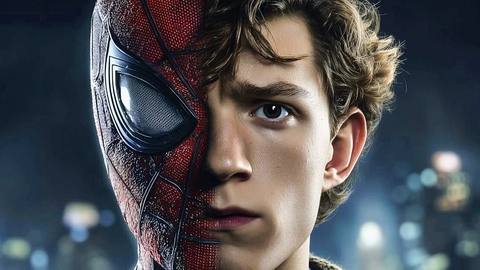
Spider-Man: Brand New Day — Full Ending Explained (Major Spoilers)
Spider-Man: Brand New Day is finally in theaters, and the twist ending is a big one. Here's every beat explained…
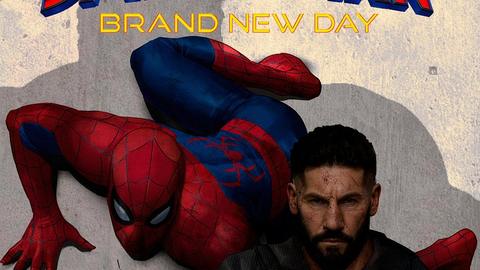
Is Frank Castle Protecting Peter or Using Him? The Punisher's True Motives
Frank Castle's sniper shot on Jean Grey is the film's biggest unanswered question. Here's why both readings hold up.
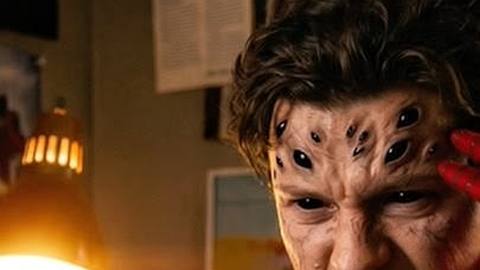
Will Peter Parker Die in the Next Chapter? The Cost of Losing His Human DNA
His spider-DNA is winning the fight for his body. If that transformation keeps going unchecked past Brand New Day…