Thanos's Philosophy, And Why It Falls Apart Under Ten Seconds Of Thought
The MCU sold Thanos as a villain with a point. He is not. Here is exactly where the argument breaks, and why the films needed you not to notice.
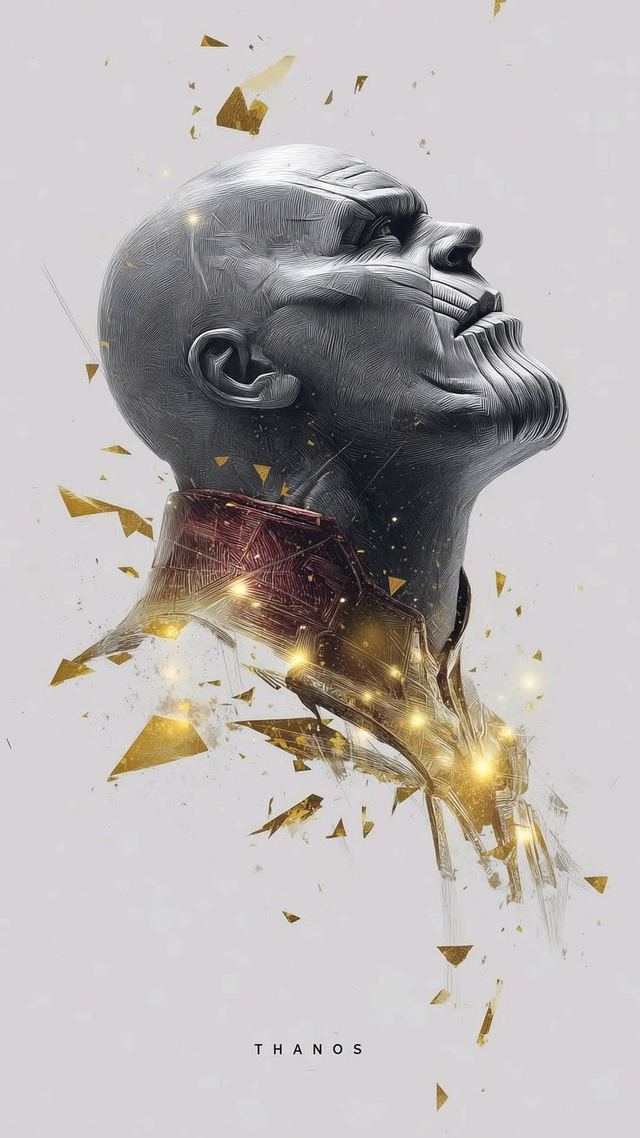
Infinity War is a masterclass in construction. It gives its antagonist the protagonist's role, structures the film around his quest rather than the heroes' resistance, and ends with him winning. It is also the film that convinced a very large number of people that Thanos had a point. He does not. The argument is not merely wrong, it is wrong in ways that a character of his stated intelligence would have identified in an afternoon, and the film's own sequel quietly concedes this.
The Stated Position
Thanos' claim is straightforward. The universe has finite resources and a growing population. Left alone, that trajectory ends in collapse, famine and extinction — which he says he watched happen on his own world, Titan, after his proposal to cull half the population was rejected. Therefore, killing half of all life, at random and with perfect impartiality, is a mercy. The survivors inherit abundance.
He calls it balance. He describes himself as the only one willing to do what is necessary. And crucially, the film frames the randomness as the moral component — he is not choosing who dies, so he is not playing favourites. It is presented as a terrible calculus performed by someone honest enough to do the arithmetic.
Where It Breaks
- The maths is temporary. Halving a population that grows exponentially buys time, not a solution. At an average doubling period, the universe returns to its previous population in a single generational cycle. Thanos, who has spent centuries on this, has designed an intervention with a built-in expiry date and no follow-up plan.
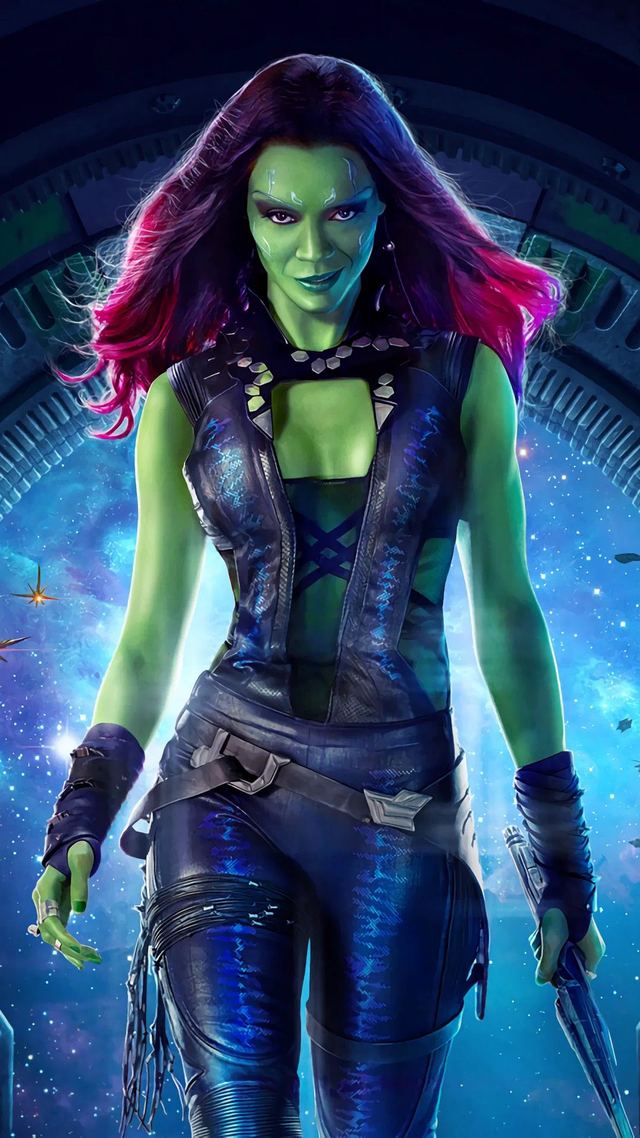
- He held the Infinity Gauntlet. With unlimited power over reality, matter, space, time, souls and minds, doubling the available resources is trivially easier than exterminating half of all sentient life. He explicitly rejects this. Gamora raises it directly and he calls the idea presumptuous, which is not a rebuttal.
- Randomness is not impartial. A random cull is catastrophically unequal in effect. It removes half the surgeons from a hospital, half the pilots from a plane, half the parents from every family. The MCU's own Phase 4 spent years documenting the humanitarian collapse this caused. Impartiality at the point of selection produces extreme injustice at the point of consequence.
- Resource scarcity is not primarily a headcount problem, and any civilisation capable of interstellar travel has already demonstrated it can solve production. Thanos applies a pre-industrial framework to a post-scarcity setting.
- Titan is a single data point that he never re-examines. He generalises from one planet's collapse to a universal law, which for a self-styled empiricist is an extraordinary failure.
A being with a machine that can rewrite reality chose to use it for subtraction. That is not a philosophy. That is a grudge with a very large budget.
What The Films Actually Argue Through Him
The interesting reading is not that the writers made a mistake. It is that the writers wrote a man with a trauma who has retrofitted a philosophy onto it, and then the marketing sold the philosophy as though the film endorsed it.
Look at the evidence the film gives you. He has adopted daughters — Gamora and Nebula — and tortured one into a weapon and the other into a rival. He describes murder as mercy while enjoying the ceremony of it. He builds a farm and calls it retirement. He requires being told that he is right. The Soul Stone sequence is the film's own verdict: the universe asks him to prove he loves something, and the price is the daughter he mutilated. That is not a portrait of a philosopher. It is a portrait of a man who needed a reason.
Where The Screenwriting Succeeds Anyway
None of this makes Infinity War a bad film. It makes it a film whose antagonist is well-drawn and poorly reasoned, which is a different and more interesting thing. Josh Brolin's performance carries genuine weariness. The structure — a villain's hero journey — is the boldest formal choice Marvel has ever made. And the film never once has a character successfully refute him on screen, which is a deliberate and effective way of making an audience uncomfortable.
| What the film does well | What it gets away with |
|---|---|
| Gives Thanos the protagonist structure and the emotional climax | Never lets a hero articulate the obvious counter-argument |
| Grounds his conviction in a specific loss | Presents that loss as evidence rather than as trauma |
| Makes his calm more frightening than rage | Codes calm as rationality, which the script never earns |
| Pays off the Soul Stone with a real moral cost | Uses that cost to imply depth rather than to indict him |
Why Endgame Had To Change Him
Endgame makes a revealing adjustment. The 2014 Thanos who arrives in the third act, upon learning that the universe resisted his correction, immediately escalates to destroying it entirely and rebuilding from scratch. The stated goal was never balance. It was compliance. That version drops the philosophy the moment it stops flattering him, and the film treats this as continuity rather than contradiction — because it is.
That is the honest read on the character. Compare it with Erik Killmonger, whose argument the film actively concedes and whose policies survive him — we cover that in our analysis of why he still leads the field. And compare it with what Marvel is setting up for December, where the villain's claim to be right is the entire point of the character, assessed in our three-way comparison.
The Fair Verdict
Thanos is an excellent character and a terrible thinker, and those two facts are not in tension. The mistake was ever treating the second as a compliment to the first. If you want a villain whose reasoning survives contact with an audience, look at Doctor Doom, whose position — that the world would be better governed by the most competent person in it — is genuinely difficult to dismantle and which the comics have spent sixty years failing to fully refute.
Frequently asked
Why does Thanos want to kill half the universe in the comics?
Could Thanos have just doubled the resources instead?
Is Thanos the strongest MCU villain?
Did the Blip actually solve anything in the MCU?
Characters in this story
Catching up on the MCU? See where this fits on our full timeline.
Read next
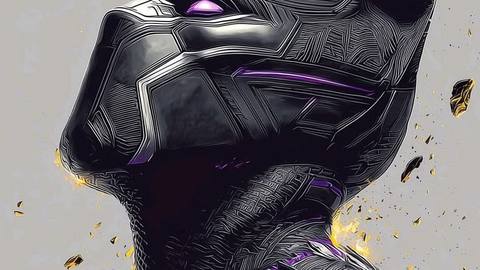
Why Killmonger Is Still The MCU's Best-Written Villain
Eight years and twenty films later, nobody has beaten him. A close reading of why Erik Killmonger works when almost…
Doom vs Thanos vs Kang: Which Franchise Villain Marvel Actually Got Right
One landed, one collapsed, and one arrives in December. A structural comparison of Marvel's three…
The Essential Marvel Storylines Every Fan Should Read At Least Once
Eighty-five years of publishing, narrowed to the arcs that actually matter. A ranked, honest reading list with…