Canon Events Explained: The Spider-Verse's Rules, and Why Miles Breaks Them
Miguel O'Hara says a Spider-Man who breaks a canon event destroys a universe. Here is what the films actually establish — and where the rule quietly contradicts itself.
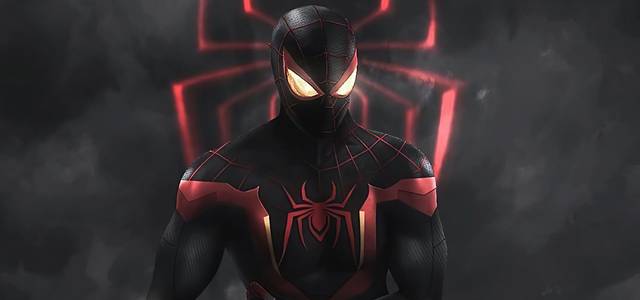
Across the Spider-Verse is the only Marvel film built entirely around a rule of multiversal physics, and it is also the only one where the rule is openly disputed by the characters explaining it. That combination is why the discourse around canon events has not settled in three years.
One clarification before we start, because it trips people up constantly: this is Sony's animated Spider-Verse continuity. It is not the MCU, it does not share rules with Multiverse of Madness, and nothing here has been established as applying to Tom Holland's Peter Parker.
What a Canon Event Is
In the films' framing, every Spider-person's life contains a set of fixed, recurring beats that appear across all universes. They are not coincidences — they are described as structural, the load-bearing events that make a universe with a Spider-Man in it hold together.
| Canon event | Description | Seen in |
|---|---|---|
| The bite | A radioactive or genetically altered spider bites the future hero | Every Spider variant introduced |
| The death of a mentor figure | An uncle, a father figure, the person who taught them responsibility | Peter's Uncle Ben; Miles' uncle Aaron |
| ASM-90 | The death of a police captain close to the Spider | Gwen's father George Stacy; Captain Singh in Mumbattan |
| The origin loss | A defining failure the hero cannot prevent | Framed as universal across the Society |
Miguel O'Hara's claim is that interfering with one of these does not merely change a life — it collapses the universe the event was holding up. He offers proof: he once replaced a dead version of himself in another reality, tried to live that man's life, and watched that reality disintegrate around him.
The Rule's Evidence Problem
Here is where the films are cleverer than most viewers give them credit for. Miguel's evidence is a single incident, self-reported, involving a man who had every emotional reason to interpret it the way he does. He lost a daughter. He needed the loss to have been a law rather than a mistake.
- The Spider-Society enforces the rule at enormous scale on the basis of one anecdote.
- Nobody in the film independently verifies that Miguel's universe collapsed because of a canon event rather than because he was a foreign body in it.
- Jessica Drew, the Society's most competent field agent, follows the rule without ever defending it on the merits.
- The one character who has actually broken a canon event and survived — Gwen's father resigning rather than dying — is treated as a problem to be managed rather than as data.
A rule that has never been tested by anyone willing to lose the argument is not a law of physics. It is a policy with a good story attached.
Why Miles Is Different
Miles Morales does not merely break the rule — the film argues he was never inside it. The spider that bit him came from another universe. In his own reality, there was supposed to be a different Spider-Man, and there was not, because the spider was somewhere else. Miguel's phrase for him is the original anomaly.
That reframing changes what the third act is about. If Miles exists outside the canonical pattern, then the pattern is not a universal law — it is a description of what usually happens, and he is the counter-example standing in the room while everyone insists counter-examples are impossible.
How This Compares to the MCU's Rules
Worth setting side by side, because fans routinely mix them.
| Concept | Spider-Verse | MCU |
|---|---|---|
| What creates alternate realities | Not explained — universes simply exist in parallel | Divergence and branching, per Loki |
| What destroys a universe | Breaking a canon event, per Miguel | An incursion between two universes |
| Who enforces the rules | The Spider-Society, a voluntary body | The TVA, formerly an enforcement agency |
| Whether the rules are reliable | Openly contested inside the films | Revealed as one man's preference in Loki |
| Consequence of travel between realities | Physical glitching in the wrong universe | Boundary erosion leading to incursions |
The interesting convergence is the last row of the fourth: both franchises independently arrived at the same twist, which is that the authority explaining the rules of the multiverse is not neutral. He Who Remains built the Sacred Timeline to protect his own position; Miguel built the Society to make his grief mean something. Our breakdown of the MCU's version covers that reveal in detail.
What the Films Never Explain
- Where canon events come from. No character offers an origin — they are treated as observed regularity, not as something imposed by anyone.
- Why some universes have no Spider-person at all, which Miles' own reality demonstrates is possible.
- Whether the Society's interventions are themselves canon events, which would make the whole enforcement operation self-fulfilling.
- What actually happens to a universe when an event is broken, beyond Miguel's single account of his own.
- How the glitching that afflicts a traveller in the wrong universe relates, if at all, to universe collapse.
That last omission is the interesting one. Glitching is presented as a physical incompatibility between a person and a reality that is not theirs — the same fundamental idea as the MCU's boundary erosion, arrived at independently and given a completely different visual grammar. Neither franchise has connected them, and there is no reason they should. But it is a reminder that when two Marvel properties invent multiversal physics separately, they converge on the same anxiety: you do not belong here, and the universe can tell.
What the Rule Is Really About
Strip out the physics and canon events are an argument about whether a life can be different from the lives that came before it. Every Spider-person in that film has been told that their suffering was necessary. Miles is the first one to ask who decided that, and the answer turns out to be a man in a red suit with a spreadsheet.
Frequently asked
What is a canon event in the Spider-Verse?
Are canon events real, or is Miguel wrong?
Do canon events apply to the MCU?
Why is Miles called the original anomaly?
Characters in this story
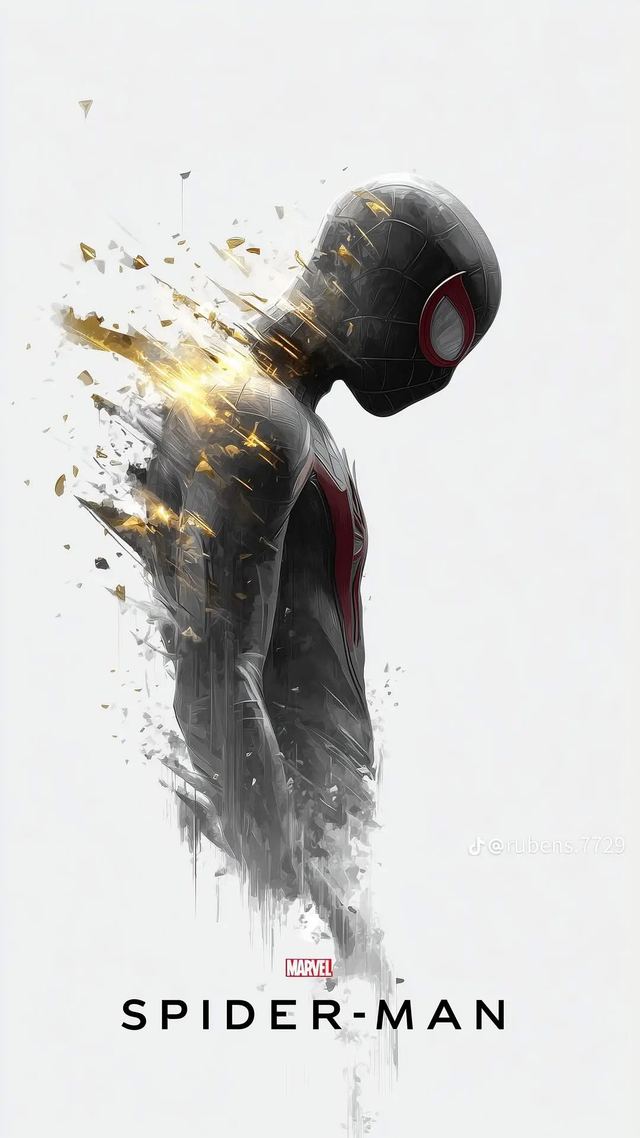
Miles Morales
Miles Gonzalo Morales

Spider-Gwen
Gwendolyne Maxine Stacy
Spider-Man 2099
Miguel O'Hara

Spider-Man
Peter Benjamin Parker
Catching up on the MCU? See where this fits on our full timeline.
Read next
Incursions Explained: How Two Universes Kill Each Other in the MCU
The MCU's deadliest mechanic has been on screen since 2022 and most viewers still cannot define it. Here is exactly…

Who Is the 'Invisible' Villain of Spider-Man: Brand New Day? Every Candidate, Ranked by Evidence
Marvel's own synopsis calls the villain 'invisible' and refuses to name them. Nine days from release, here is every…
Sacred Timeline vs Branching Realities: What Loki Actually Changed
One timeline became infinite ones, and the rules changed twice in two seasons. A clean, scene-by-scene explanation…