Sacred Timeline vs Branching Realities: What Loki Actually Changed
One timeline became infinite ones, and the rules changed twice in two seasons. A clean, scene-by-scene explanation of how MCU time actually works now.
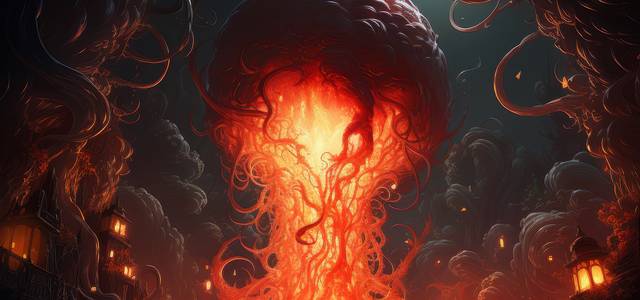
The MCU's rules for time have been rewritten twice in three years, both times inside the same series, and the second rewrite quietly invalidated most of what the first one taught. If you have been nodding along without being sure what a branch actually is, this is the explainer.
Rule Set One: The Sacred Timeline
When Loki opened in 2021, the premise was totalitarian and simple. There is exactly one correct sequence of events — the Sacred Timeline. Any deviation from it is a Nexus event. Nexus events create branches, branches are dangerous, and the Time Variance Authority exists to detect them and prune them out of existence before they grow.
Loki himself is a branch. During Endgame, the 2012 Loki grabs the Tesseract during the time heist and vanishes — an act the film treats as a loose thread and the series treats as a crime. He is arrested for it in episode one.
| Term | Rule Set One meaning (Loki S1) | Still true after S2? |
|---|---|---|
| Sacred Timeline | The single permitted sequence of events | No — it no longer exists as a single strand |
| Nexus event | A deviation that spawns a branch | Yes, but no longer treated as a crime |
| Pruning | Erasing a branch and dumping it in the Void | Discontinued as TVA policy |
| Variant | A being who has left their assigned path | Yes |
| Reset charge | Device used to erase a branch | Yes, but not used systematically |
The Reveal That Broke It
Season one's finale hands the whole apparatus a motive. At the Citadel at the End of Time, He Who Remains explains that the TVA is not enforcing a natural law — it is enforcing his preference. He was a scientist who discovered other universes, made contact with his own variants, and watched that contact escalate into a Multiversal War that nearly ended everything. He won it, and then isolated a single timeline and pruned every alternative for eternity.
Sylvie kills him. The branches bloom instantly. Everything the TVA had been doing is revealed as maintenance on one man's monopoly.
The Sacred Timeline was never sacred. It was one survivor's decision that nobody else got a vote on, enforced by an agency that did not know it was working for him.
Rule Set Two: The Loom, and Then No Loom
Season two makes the problem physical. The Temporal Loom is the machine that weaves raw time into the Sacred Timeline, and it was built for one strand. With infinite branches pouring in, it overloads. The season's entire plot is a group of bureaucrats trying to engineer a throughput fix for a machine that cannot be fixed, because the premise — that branches must be woven into a single output — is the flaw.
Loki solves it by rejecting the premise. Having learned to time-slip at will, he walks into the exploding Loom, destroys it, and takes the branches in his own hands, drawing them out into a living structure that holds without being merged. He sits at the End of Time holding the multiverse open.
What the New Rules Actually Are
- Branches are permanent. Divergence is no longer a defect to be corrected; it is the operating state of reality.
- There is no single canonical past. Every timeline that branches continues to exist and to develop independently.
- Nothing is automatically pruned. The Void still exists, but the industrial pipeline that fed it has been shut down.
- The multiverse now has a keystone rather than a warden — a structure held open by one person rather than a hierarchy policing one line.
- Branching and incursions are different problems. Branching creates realities; incursions destroy them. Our incursions explainer covers the second.
Why This Matters for Doomsday and Secret Wars
Two consequences carry straight into the 2026 and 2027 films. First, the MCU no longer has a mechanism for saying that any given reality is illegitimate. The Fox X-Men films, the retro-futurist Earth of The Fantastic Four: First Steps and every variant seen in No Way Home all now sit on branches that the fiction says are real and protected.
Second, the franchise has given itself a permanent structural weak point. A multiverse held open by a single figure is a multiverse that can be closed by removing him — which is exactly the kind of leverage a story about a franchise reset would want available. Marvel has confirmed nothing about this, and we flag it as speculation, but it is the tidiest unfired gun on the board.
The Three Words That Changed Meaning
One thing worth flagging for anyone rewatching: three pieces of TVA vocabulary now mean something different from what they meant on first broadcast, and the series never stops to tell you. A variant used to be a criminal category; it is now simply a description of a person from a different branch, which is how No Way Home and Deadpool & Wolverine can use the word without any legal weight attached. A branch used to be a wound in reality; it is now a reality. And pruning used to be presented as deletion, when the fifth episode of season one reveals it is nothing of the kind — pruned matter is relocated to the Void rather than destroyed, which is why an entire population of survivors is waiting there.
That last redefinition is the one with the longest tail. It means the TVA's entire operational history produced not an archive of erasures but a landfill of living things, and nothing in either season resolves what happens to them once the pruning stops.
The Question Loki Left Unanswered
Nobody has explained what happens to the branches if Loki lets go, and nobody has explained whether the arrangement is stable. He is not depicted as a god ruling the multiverse; he is depicted as a man holding something heavy. That is a beautiful ending and a genuinely open thread, and it is the reason the TVA's continued existence matters — a subject we take apart in our TVA explainer.
Frequently asked
Does the Sacred Timeline still exist?
What is a Nexus event?
Is Loki still holding the multiverse together?
Are branching timelines the same as incursions?
Characters in this story
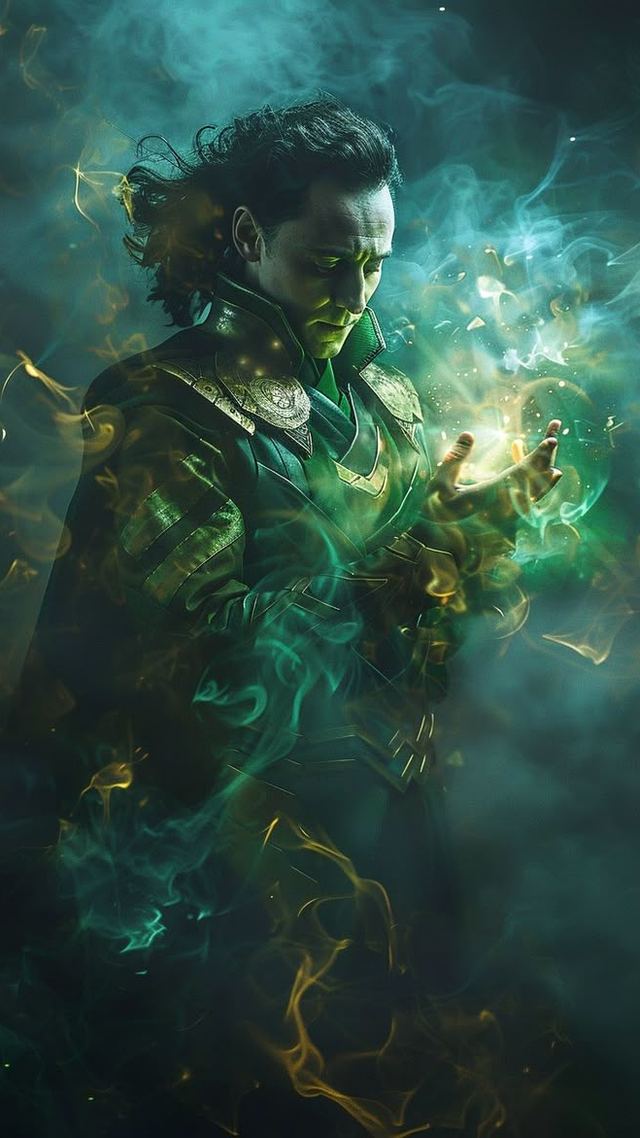
Loki
Loki Laufeyson
Sylvie
Sylvie Laufeydottir
Mobius M. Mobius
Mobius M. Mobius; on Earth, Don
Kang the Conqueror
Nathaniel Richards
Catching up on the MCU? See where this fits on our full timeline.
Read next
The TVA's Old Pruning Doctrine Might Be the Reason Doom Gets This Far
The TVA spent decades pruning branches to keep one timeline sacred. This theory argues that exact policy — not…
Loki's Bootstrap Paradox: Did Saving the Multiverse Erase the Moment That Created Him?
Loki's entire arc began with a branch he created inside Endgame's 2012 heist. If restructuring the multiverse…
What Is the TVA For Now? The Time Variance Authority's Post-Loki Job Description
The agency lost its purpose, its god and its machine in the space of two seasons — then showed up in a Deadpool…