The Real Origin Of Spider-Man — And Every Way Marvel Has Retold It
Eleven pages in 1962 created the most retold origin in fiction. Here is what actually happened in Amazing Fantasy #15, and how six decades of adaptations changed it.
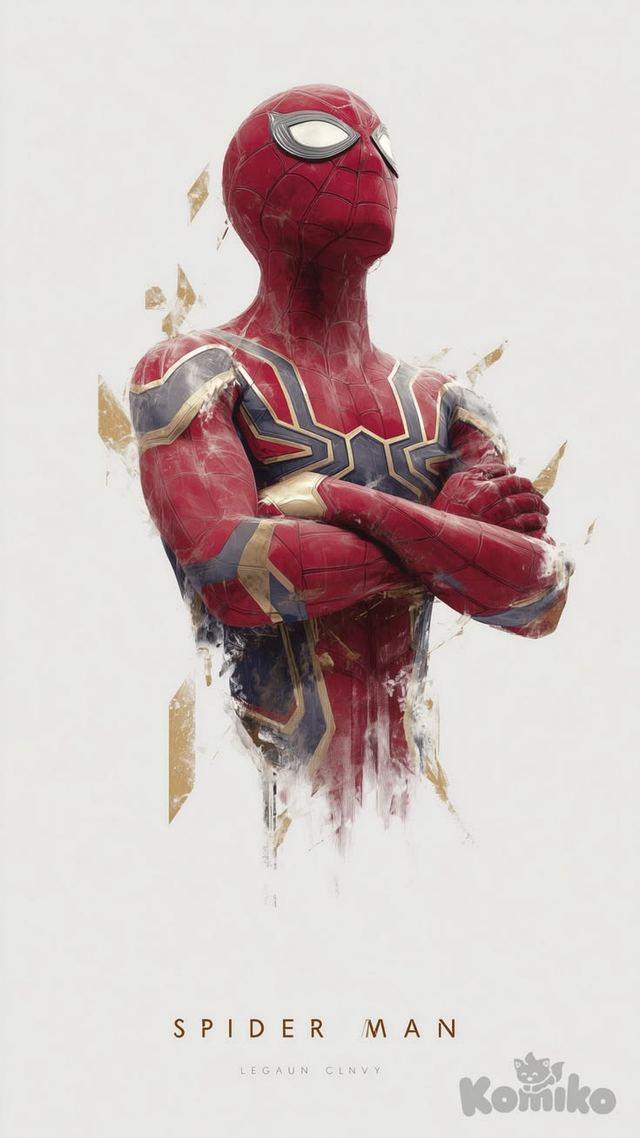
Spider-Man's origin is the most retold story in American popular fiction, which is a strange fate for eleven pages that were published as a filler strip in a cancelled anthology. Amazing Fantasy #15 came out in August 1962. The book was being wound down, Stan Lee had a spare slot, and Steve Ditko drew a teenager in a homemade costume who fails at the one moment that matters. Sixty-four years and roughly a dozen adaptations later, here is what the original actually said — and what everyone since has changed.
What Happened In Amazing Fantasy #15
The original is shorter and colder than most people remember. Peter Parker is a science student at Midtown High, bookish and socially invisible. At a public exhibition on radioactivity, a spider takes a dose of radiation and bites him on the hand. He discovers strength, adhesion, agility and a warning sense. He does not become a hero. He becomes a wrestler, then a television performer, because he has been poor and overlooked his entire life and this is the first thing that has ever gone his way.
The turn is the part that matters. After a TV taping, a thief runs past him and Peter lets him go — not out of malice but out of indifference, with a line about it being someone else's job. Days later he comes home to find his uncle murdered. He chases the killer to a warehouse, and it is the same man. The final panel is Peter walking away alone, and a caption that has outlived everyone involved in writing it.
With great power there must also come great responsibility. Note the phrasing — the original caption is not a promise Uncle Ben made. It is the narrator, and it is an indictment.
The Four Load-Bearing Beats
Strip away everything else and Peter Parker's origin needs exactly four things to function. Every successful retelling keeps all four; every failed one drops at least one.
- The bite. An accident, not a choice. Peter does not earn his powers and does not deserve them, which is why he can never feel entitled to them.
- The selfishness. He uses the powers for money first. This is non-negotiable — without it, the guilt has no foundation.
- The failure. He lets a criminal go when stopping him would have cost nothing.
- The consequence. That specific criminal kills the man who raised him. The universe does not punish Peter directly; it punishes someone else for what Peter did not do.
That fourth beat is the reason this origin has outlasted every other. Batman's origin makes him a victim. Superman's makes him an immigrant. Spider-Man's makes him complicit. He is the only major superhero whose founding trauma is his own fault, and every good Spider-Man story since has been an argument with that fact.
How Each Adaptation Has Changed It
| Version | The bite | The change | Does it work? |
|---|---|---|---|
| Amazing Fantasy #15 (1962) | Radioactive spider at a science exhibition | The baseline | Yes. Eleven pages, no fat. |
| Spider-Man (2002) | Genetically engineered spider at Oscorp | Gives the responsibility line to Uncle Ben; adds organic web-shooters | Mostly. The line lands harder spoken, but losing the web-shooters loses Peter's engineering. |
| Ultimate Spider-Man (2000) | Genetically altered spider, Oscorp again | Slows the origin to seven issues and rebuilds the supporting cast | Yes. The best long-form version of the origin ever written. |
| The Amazing Spider-Man (2012) | Cross-species genetics lab | Ties the spider directly to Peter's missing father | No. Making Peter's powers destiny rather than accident breaks the whole engine. |
| MCU (2016 onward) | Never shown on screen | Skips the origin entirely; Ben is barely referenced | Debatable. It bought pace at the cost of the character's foundation, and No Way Home had to reconstruct the guilt from scratch. |
| Miles Morales (2011) | Spider from a rival Oscorp experiment | Repeats the structure with a different loss and different powers | Yes. Proof the template survives being rebuilt. |
The Retcons That Stuck, And The One That Did Not
Comics being comics, the origin has been revisited by writers who wanted to add to it. Some additions became canon. One is famously loathed.
- The Burglar's identity — later stories established who he was working for and why he was in the house, layering the tragedy without contradicting it. Kept.
- Uncle Ben's history — Ben as a former soldier and a man with his own regrets, developed across decades. Kept, and it improves him.
- The Master Planner arc (Amazing Spider-Man #31–33) — not an origin retcon, but the story that completed it. Peter under a collapsed machine, lifting it because his aunt will die otherwise. Often called the true second half of the origin.
- The Other and the totemic spider-god material — the suggestion that Peter's powers were mystical destiny rather than an accident. Contested, quietly sidelined, and directly at odds with beat one.
- Sins Past — a 2004 arc rewriting Gwen Stacy's history with Norman Osborn. Not the origin, but the definitive example of a retcon the readership rejected outright. Later stories have effectively erased it.
Why The MCU Skipped It — And What That Cost
Civil War introduced Tom Holland's Peter with a two-line explanation and moved on, a decision made on the reasonable grounds that audiences had watched the spider bite twice in fourteen years. It worked commercially and it made Homecoming a lighter, funnier film than either predecessor. But it also meant that for five years the MCU's Spider-Man was a kid with a rich mentor rather than a boy carrying a debt.
No Way Home spent its final act rebuilding what had been skipped — an unearned power, a moment of hesitation, a death that was his fault, and an ending where he is genuinely alone. It is the 1962 origin, delivered twenty-two films late. Whether Brand New Day builds on that reset is the open question of 31 July 2026, and Marvel has confirmed almost nothing about the plot beyond an official synopsis referencing an unspecified invisible villain.
Where To Read It
- Amazing Fantasy #15 (1962). Eleven pages. Read it once for history and once for how efficient Ditko's staging is.
- Amazing Spider-Man #31–33 (1965–66). The Master Planner arc. The origin's real conclusion.
- Ultimate Spider-Man #1–13 (2000–01) by Bendis and Bagley. The origin with room to breathe, and the version most modern adaptations quietly borrow from.
- Spider-Man: Blue (2002) by Loeb and Sale. A retrospective, and the most emotionally direct book about what all of this cost him.
For the wider family this origin spawned across the multiverse, our Spider-Verse guide maps every major spider and how their versions of these four beats differ. And if you want the broader canon, several Spider-Man arcs appear in our essential reading list.
Frequently asked
Did Uncle Ben say 'with great power comes great responsibility' in the comics?
Why does the MCU never show Uncle Ben?
Are Peter's web-shooters natural or built?
Is Miles Morales' origin a copy of Peter's?
Characters in this story
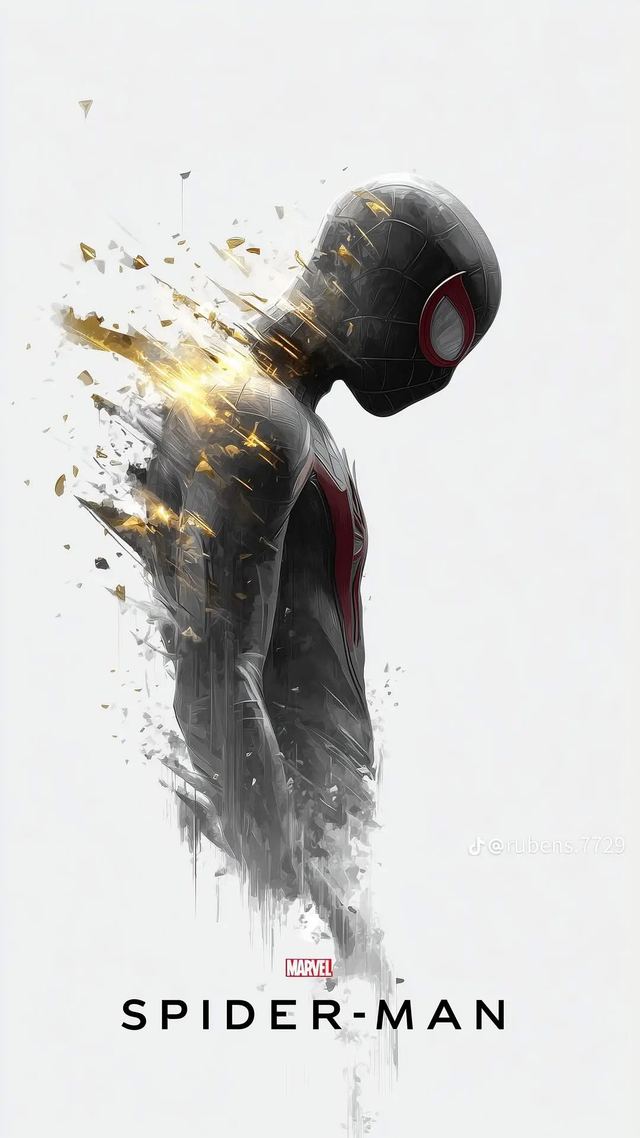

Catching up on the MCU? See where this fits on our full timeline.
Read next
Who's Who In The Spider-Verse: Every Major Spider Explained
There are hundreds of Spider-People across the multiverse and about nine that matter. A newcomer's map to the…
The Essential Marvel Storylines Every Fan Should Read At Least Once
Eighty-five years of publishing, narrowed to the arcs that actually matter. A ranked, honest reading list with…
What Makes Kingpin Work Where Every Other Crime Boss Fails
Superhero fiction is littered with forgettable mob bosses. Wilson Fisk is not one of them. A close look at the…