The Wakandan Glyphs Decoded: The Real African Script Hiding In Every Black Panther Frame
Wakanda's written language is not invented. It is Nsibidi, a real West African script, and once you know that, every screen in Shuri's lab reads differently.
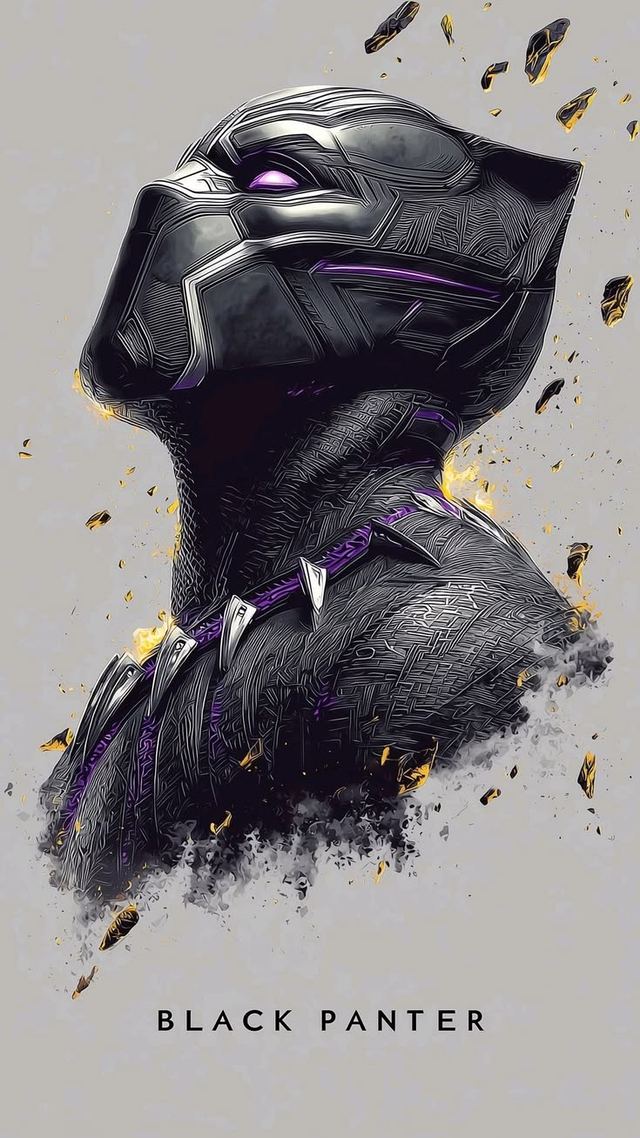
The single most-asked question about Black Panther is whether the writing all over Wakanda means anything. It does. The glyphs are Nsibidi, a genuine ideographic script from what is now south-eastern Nigeria and western Cameroon, historically associated with the Ekpe society and used among Igbo, Efik and Ejagham communities. Marvel did not invent an alphabet. It borrowed a real one, and that choice sits at the centre of everything the film's design does.
Where the glyphs actually appear
- The hull and interior displays of the Royal Talon Fighter.
- Shuri's laboratory interfaces, including the sand table and the remote-driving rig.
- The vibranium mining operation and the Great Mound signage.
- Kimoyo bead interfaces and the medical displays in the lab.
- The Black Panther habit itself, in the woven texture of the suit.
- The film's own end-credit typography, which uses a Wakandan-derived display face.
Once you know to look for it, the density is striking. Wakanda is a country where the writing is everywhere because it is a literate, bureaucratic, working society rather than a hidden temple. That is a political argument made entirely through set dressing.
The people who built it
| Craft | Who | What they won |
|---|---|---|
| Production design | Hannah Beachler | Academy Award for Best Production Design, the first Black winner in the category |
| Costume design | Ruth E. Carter | Academy Award for Best Costume Design, the first Black winner in the category, and again for Wakanda Forever |
| Spoken language | isiXhosa, coached with John Kani | Kani, who plays T'Chaka, is a native speaker and the language was chosen off the back of his Civil War scenes |
Beachler's approach is worth understanding because it explains the coherence. She assembled a five-hundred-plus-page Wakanda bible covering the nation's history, technology and tribal structure before designing a single set, and the glyph system was part of that document rather than a decorating pass added later.
Wakanda's writing is everywhere because Wakanda is a country that keeps records, not a temple that keeps secrets.
The costumes are doing the same job
Ruth E. Carter's designs are built as a tribal atlas, and each tribe's silhouette points at a real culture rather than a generic one.
- The Border Tribe's blankets draw on Basotho heritage blankets from Lesotho, worn as both garment and shield generator.
- The Dora Milaje's neck rings reference Ndebele traditions, adapted into armour.
- The Merchant Tribe's palette and headwear draw on Tuareg and Sahelian dress.
- The River Tribe's lip plates reference Mursi and Suri practice.
- The Jabari's wooden armour and mask work draws on Dogon carving traditions from Mali.
- Queen Ramonda's mantle and shoulder pieces were 3D-printed, with her headwear referencing the Zulu isicholo.
The one to look closest at is Erik Killmonger's scarification. The raised marks covering his torso are one per kill, a detail the film states out loud, and Carter's design draws on real body-modification traditions while making the character's history legible at a glance. It is the same principle as the glyphs: real reference, specific meaning.
The details you probably missed
The suit remembers
The Black Panther habit stores kinetic energy and releases it, and the purple glow pattern that spreads across it maps where the wearer was struck. In the sequence on the Busan streets, you can read the fight backwards off T'Challa's chest.
Bucky's arm
The vibranium arm Shuri builds for Bucky Barnes carries Wakandan glyph detailing along the plating, and it is the only piece of Wakandan manufacture worn by a non-Wakandan for an extended period.
The Talon's ceiling
The Royal Talon Fighter's interior displays project glyphs onto the hull surface rather than onto screens, which is a small but consistent Wakandan design rule: their technology has no bezels.
The tribal council chamber
The council room's floor pattern, the seating arrangement and the ceremonial staffs all encode the tribal hierarchy the film otherwise never explains in dialogue. You can work out who has power in Wakanda from a wide shot, and the Jabari's physical position at the edge of the chamber tells you their political standing before M'Baku opens his mouth.
Wakanda Forever extends the same rules
Wakanda Forever builds on the system rather than replacing it. Carter's second Oscar-winning turn introduces Talokan, and the film is careful to give the two civilisations entirely separate visual grammars: Wakandan craft is woven, printed and glyph-marked, while Talokanil work is carved, shell-based and organic. Nothing in Talokan uses Nsibidi at all, which is how the design tells you these are strangers rather than cousins. When Shuri takes the mantle, her habit carries the same kinetic-energy patterning as her brother's with the glyph detailing rearranged rather than dropped, and the difference between the two suits is legible in a single still frame.
What we did not include
There are several circulating charts claiming to be a complete Wakandan-to-English alphabet, allowing fans to translate on-screen text word for word. We have not used any of them. Nsibidi is ideographic and its historical use was restricted and contextual, so a clean one-to-one substitution cipher is not how the real script works, and Marvel has not published an official key. Individual claimed translations of specific frames are therefore unverified, and we have left them out.
For more design-level reading of this kind, our MCU costume detail deep dive extends the analysis across the franchise, and the Sanctum Sanctorum piece does the same for Marvel's other most detailed set.
Frequently asked
Is the Wakandan written language real?
What language do Wakandans speak in the films?
What do Killmonger's scars mean?
Can you translate the Wakandan glyphs on screen?
Characters in this story

Catching up on the MCU? See where this fits on our full timeline.
Read next
MCU Costume Details You Missed: What Fifteen Years Of Superhero Tailoring Is Actually Telling You
Cap's Endgame suit is a greatest-hits compilation. Spidey's last suit has visible stitching. Marvel's costume…
Inside The Sanctum Sanctorum: The Hidden Details, Relics And Comic References You Walked Past
177A Bleecker Street is the most detail-dense set in the MCU. Here is what is actually on those shelves, and the…
The TVA Set Design Decoded: Every Hidden Detail In Loki's Retro-Bureaucratic Nightmare
Brutalist concrete, 1970s office furniture and an animated clock with a Southern accent. The TVA is the MCU's…