The Ultimate Sacrifice Theory: Could Peter Die Across Every Timeline?
Fans have decided the Multiverse Saga ends with Peter erasing himself across every reality. The case is stronger than it sounds - and it still falls apart.
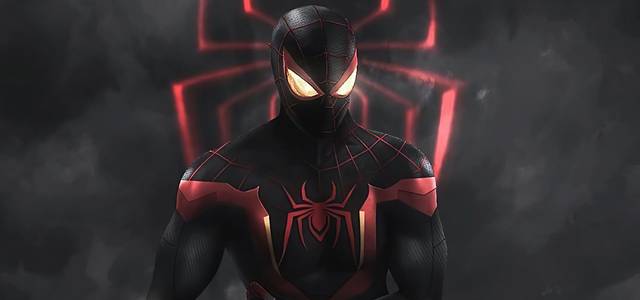
The Spider-Man sacrifice theory is the neatest ending anybody has written for the Multiverse Saga, and its neatness is the first reason to be careful with it. The pitch runs like this: Avengers: Secret Wars closes with Peter Parker giving himself up across every timeline at once - a co-ordinated self-erasure that seals the fractures running through the multiverse and finishes the job Doctor Strange's spell started at the end of No Way Home.
It is a good pitch. It has the shape of an ending, which is more than most fan theories manage, and it borrows its authority from three real things: this franchise's habit of closing a saga on a sacrifice, the structure of the comics event Secret Wars takes its name from, and the fact that Peter's recent arc is already a story about being deleted from the world he saves.
None of it is reporting. Avengers: Secret Wars lands on 17 December 2027 and Robert Downey Jr. is the only cast member Marvel has publicly confirmed. Tom Holland's involvement is unannounced, the plot is unannounced, and no studio has said a word about anybody dying. What follows is a fair hearing for the theory, and then an honest account of where it comes apart.
Where the Spider-Man Sacrifice Theory Comes From
This one did not start with a scooper. There is no leaked script page, no set photo, no insider claim behind it - which, oddly, makes it more interesting than the average rumour, because it means fans assembled it out of material sitting in plain sight.
Strip it back and it stands on three pillars:
- Franchise precedent. The Infinity Saga ended with the most valuable character in the franchise dying to reverse a universal catastrophe. Endings here come with a bill, and somebody pays it.
- Comics precedent. Secret Wars, in both its 1984 and 2015 forms, is a story about universes colliding, collapsing and being rebuilt. It is an erasure event by design.
- Character precedent. Peter has already been erased once. No Way Home removes his name and face from every mind on Earth, MJ and Ned included. The character is pre-loaded for a story about self-deletion.
Three real pillars, one imagined roof. The leap - from "this saga likes sacrifices" to "Peter specifically dies in every timeline simultaneously" - is the part with nothing underneath it.
Precedent One: This Franchise Ends Its Sagas on a Sacrifice
Tony's snap is the template everyone is working from
The last act of Endgame is the clearest statement of intent Marvel Studios has ever made. Tony Stark takes the stones, says six words and dies to undo an event that erased half of everything. The Infinity Saga's emotional accounting is settled by one man paying with his life for a cosmic undo.
That ending worked so completely it has become the assumed grammar of a Marvel finale. If Secret Wars is the end of a saga, the reasoning goes, somebody has to be Tony. And with Downey now wearing Doom's mask on the other side of the fight, the seat looks vacant.
The pattern is a sample of one
It is worth saying plainly: the MCU has finished exactly one saga. A single data point is a habit only if you want it to be. That same finale sent Natasha off Vormir, and then walked Steve Rogers out through a time machine rather than a grave - three major exits, three completely different mechanisms.
Sacrifice is a Marvel mood rather than a Marvel rule. Predicting the next finale from it is closer to reading a horoscope than reading a release schedule.
Precedent Two: Secret Wars Is Built on Erasure - Just Not Peter's
The comics side of the argument starts strong and then turns on itself. Jonathan Hickman's 2015 Secret Wars is the fullest version: incursions destroy the Marvel multiverse, the surviving fragments are stitched into a patchwork planet called Battleworld, and Doctor Doom rules it as a god. Reality ends. Somebody puts it back.
Marvel Studios has been signposting that shape for a while now. Downey plays Doom rather than Stark, the 2025 comics event One World Under Doom handed Doom the Earth right as the Doomsday marketing began, and Kevin Feige has framed the 2027 film as the end of the Multiverse Saga and a reset for the franchise. The collapsing-realities language the films have been using since Multiverse of Madness points the same way.
Here is the difficulty for the theory. In the comic, the restoration is not Peter Parker's doing. Reed Richards and the Molecule Man rebuild reality, while Peter is one of a handful of survivors who rides out the end of everything on a life raft. If Hickman is your map, Spider-Man is the witness, not the payment.
If you are using the comics as your map, Peter Parker survives Secret Wars. He is the one left to remember it.
Precedent Three: Peter's Arc Is Already an Erasure Story
This is the pillar that genuinely holds weight. The end of No Way Home is canon and it is brutal: Peter asks Strange to make the world forget Peter Parker, and it works, MJ and Ned included. He leaves that film with no name, no records and a suit he sewed himself.
So the theory is not inventing a register. Self-erasure as an act of love is already this Peter's signature move - he has performed it once, at the scale of one planet. Scaling it up to every planet in every reality is dramatically the same gesture with the volume raised.
Spider-Man: Brand New Day arrives on 31 July 2026 under Destin Daniel Cretton, with Holland, Zendaya, Jacob Batalon, Sadie Sink, Jon Bernthal as the Punisher, Mark Ruffalo as Hulk, Michael Mando and Tramell Tillman - and an official synopsis that references only an unspecified "invisible" villain. Sink's and Tillman's roles are still officially unannounced, so every identification circulating for them is rumour. Whether that film steers Peter toward a multiversal finale or firmly away from one is not something anyone outside the edit suite can tell you.
What the Saga Has Set Up Versus What the Theory Needs
The most useful thing on this page is not the argument, it is the gap. On the left, what the films have actually established. On the right, what the Spider-Man sacrifice theory requires them to have established.
| What the saga has actually set up | What the theory needs it to have set up |
|---|---|
| A hero can reverse a universal event by paying with his life (Endgame) | A hero can pay once and have it register in realities he is not standing in |
| Magic can erase one person from the memory of everyone on Earth (No Way Home) | Magic can erase one person from existence across every reality, permanently |
| Realities can collide and be destroyed, and the multiverse can be held together by one person (Loki's ending) | That act can be performed simultaneously by many versions of the same man |
| Doctor Doom, played by Robert Downey Jr., is the engine of the finale | Doom's defeat specifically requires a Spider-shaped counterweight - nobody has said this |
| Secret Wars is the end of the Multiverse Saga and a franchise reset (Feige) | The reset is paid for with a hero's death rather than a rewrite |
| Tom Holland headlines Brand New Day on 31 July 2026 | Holland's deal, and Sony's, allow the character to be retired outright |
| RDJ is the only confirmed Secret Wars cast member | Spider-Man is in the film at all |
Everything in the left column is on the record. Everything in the right would have to be invented - most of it inside a single film already carrying the largest cast this franchise has ever assembled.
Where the Spider-Man Sacrifice Theory Falls Apart
Shared assets do not get killed
Peter is the only major MCU lead whose film rights sit outside Marvel. Sony holds them, produces and distributes the solo films, and lends the character into the Avengers pictures under an arrangement that publicly collapsed in 2019 and was rebuilt within weeks. A permanent, multiverse-wide death would mean two companies agreeing to retire the most commercially reliable superhero either of them has.
The commercial picture argues against it loudly. Brand New Day is tracking for a $180M-plus opening, the biggest of 2026, in a year when Marvel badly needs one after a 2025 in which its strongest performer, The Fantastic Four: First Steps, took $519.1M worldwide and no Marvel title reached the global top ten. Studios in that position do not delete their most bankable character across all realities as a third-act flourish.
Holland has been saying the opposite in public
Holland has spoken openly, and often, about wanting to keep playing Peter, and Sony has titled his fourth solo film Brand New Day - not a name you give a farewell. Neither point is proof. Actors' plans change and titles are marketing. But an ending that wipes the character out of every timeline sits awkwardly against the way everyone involved has been talking.
The mechanic does not exist
The biggest hole is the simplest to state. The MCU has never shown anybody acting across timelines at once. It has shown variants, doubles, portals and branches; it has never shown one person's single act registering simultaneously in universes he is not in.
The closest thing on the board is Loki's ending, where he seizes the collapsing branches and sits at the end of time to keep them alive. That is a real multiversal sacrifice - and note that it is still one person, in one place, doing one thing. It also means the saga has already spent this ending once. Playing it again with a different hero would read as repetition rather than climax.
To make the theory work, Secret Wars would have to do all of the following:
- Establish a rule by which a self-erasure propagates across realities - something no MCU film has ever stated.
- Explain why Peter is the necessary anchor, when Doctor Strange, America Chavez and whatever remains of the TVA all sit far closer to the multiverse's machinery.
- Get Sony and Marvel to agree, contractually and publicly, to end the character.
- Fit all of that around Doom, three universes' worth of heroes and the setup for whatever the franchise becomes next.
What Is Actually Known About Avengers: Secret Wars
Very little, and that is the point. Avengers: Secret Wars is dated 17 December 2027, moved back from 7 May 2027. Anthony and Joe Russo direct, Michael Waldron writes, and Feige has described it as the end of the Multiverse Saga. Robert Downey Jr. is the only publicly confirmed cast member. That is the entire factual record.
Even the film before it is unsettled on this question. Avengers: Doomsday opens 18 December 2026 with a confirmed cast of roughly thirty names and a logline about heroes from "three distinct universes". Tom Holland is not among those names, which makes Spider-Man's presence in Doomsday an open question rather than a given - and this theory needs him in both films.
The Version of This Theory That Might Survive
There is a smaller, more plausible cousin of the Spider-Man sacrifice theory, and it is the one worth watching. Peter does not die; he pays again. He gives up the one thing No Way Home left him - the possibility of going back - or he absorbs the cost of the repair in a way that leaves him alive and permanently out of reach.
That version needs no new mechanic, costs Sony nothing, matches the logic these stories have always run on, and lands the same emotional beat. It is also, honestly, far less fun to theorise about, which is exactly why the louder version travels further.
Until 17 December 2027, both versions are guesswork with a good ear for structure. That is not a criticism - guessing well is half the pleasure of a saga still in progress. It only becomes a problem when somebody states the guess as fact, and on this one, nobody has any facts to state.
Frequently asked
Does Peter Parker die in Avengers: Secret Wars?
Is Tom Holland confirmed for Avengers: Secret Wars?
What is the Spider-Man sacrifice theory?
Has the MCU ever shown a hero sacrificing himself across multiple timelines?
Could Sony let Marvel kill off Spider-Man?
When does the next Spider-Man film come out?
Characters in this story
Read next
The Lonely Weaver: Peter's Grief And The Cracks In The Multiverse
Tony dies, Peter breaks, and a spell he asked for tears a hole in reality. That chain is on screen. The claim that…
Is Tom Holland's Spider-Man Reaching His Final Arc?
Brand New Day is Holland's fourth solo outing, and plenty of fans have read that as a goodbye. Here is the…
Love In The Collateral Damage: Why Keeping MJ Away May Pull Her Back In
Peter erased himself from MJ's memory to keep her safe. The theory: in this trilogy, being kept at a distance has…