The Catalyst For War: When Do The Avengers Start Seeing Peter As A Threat?
There is a test buried in the MCU for the moment allies stop calling you a hero. We built it out, ran Peter Parker through it, and he fails almost every row.
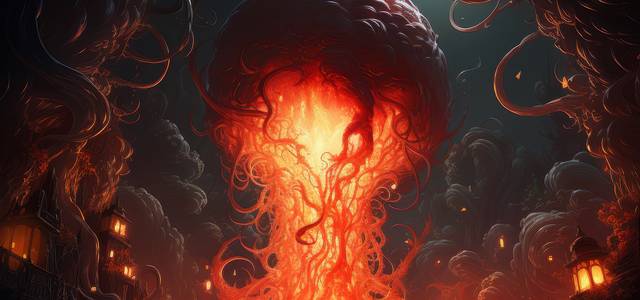
The Spider-Man cosmic threat theory has quietly become one of the most durable fan arguments of the year: that somewhere between this summer's solo film and the two Avengers pictures behind it, Peter Parker stops being the team's kid brother and becomes the thing the team has to solve. It is a strong hook. It is also, on the evidence available, one of the least likely outcomes on the board — and working out exactly why is a more interesting exercise than pretending otherwise.
The useful question is not whether it would be dramatic. It is mechanical. What does a hero have to do before the people standing next to him stop treating him as an asset and start treating him as a problem? The MCU has answered that on screen more than once, consistently enough that you can build a test out of it.
Everything below is analysis and fan speculation with no reporting behind it. Marvel Studios has said nothing about Peter's standing with the Avengers, nothing about a heel turn, and nothing about what he does or does not do in Avengers: Doomsday. The framework is ours. The canon it is built on is real, and where the two disagree, we have said so.
Four Thresholds: What The MCU Actually Uses To Reclassify A Hero
Strip out the theatrics, and every time this franchise has treated one of its own as a threat rather than a liability, the same four questions sit underneath it. They are worth naming, because most versions of this argument online only ever answer the first one.
- Scale of consequence. When this person is wrong, how far does the damage travel? A city block is a Tuesday in New York. A dead universe is a different category of conversation entirely.
- Repeatability. Was it a one-off produced by circumstances that no longer exist, or is it a capability sitting inside the person, which they carry into the next room and the room after that?
- Volition. Can they stop? A hero who chooses badly is a policy problem, and policy problems get arguments and accords. A hero who cannot choose at all is a containment problem, and containment problems end differently.
- Exclusivity. Can anyone else do this — and, the part everyone forgets, can anyone else undo it? A unique capability with no counter is what turns “somebody should talk to him” into “somebody needs a plan”.
The four are not weighted equally. Scale gets the headlines, but the MCU's own precedent says volition and exclusivity are what actually trigger the reclassification. Nobody drafts a contingency for a friend who can stop.
Nobody drafts a contingency for a friend who can stop. They draft it for one who cannot.
The Franchise Has Run This Test Before, And Once It Ended In An Execution
Doctor Strange: the only hero the MCU has shown allies putting down
This is the cleanest data point in the entire universe and it gets discussed far less than it should. In Doctor Strange in the Multiverse of Madness, the Illuminati of Earth-838 explain what happened to their Stephen Strange. He used the Darkhold, an incursion followed, another universe died, and his own colleagues convened and killed him. Black Bolt did it.
Score that on the four thresholds and it is a clean sweep. Universe-scale consequence. A repeatable method, because the book was still on the shelf. Volition already compromised by the thing he was reading. And no counter, because nobody else could dreamwalk and nobody at all could put the universe back. Even then, the people who loved him needed all four before they moved.
Wanda Maximoff: the classification that arrived late and from the wrong direction
WandaVision is often cited as the MCU's threat-classification story, but Tyler Hayward's SWORD reached for the word terrorist while the actual situation was a grieving woman with no brake and no idea she had taken a town. The institutional response was wrong about both the diagnosis and the cure.
The reclassification that counted happened later, at Kamar-Taj, and only after the Darkhold made the volition question unanswerable. Even then the resolution was not force. It was Wanda seeing two frightened children look at her and bringing Mount Wundagore down on herself. The MCU keeps arriving at the same conclusion: the only thing that reliably stops one of these people is the person deciding to stop.
Bruce Banner and the most honest object in the MCU
The Hulkbuster is a contingency plan for a colleague, built before that colleague did anything, and Tony did not build it alone. Bruce helped design Veronica. The person most worried about Banner was Banner, which is why Johannesburg reads as tragedy rather than betrayal, and why he flew himself away afterwards.
Then Endgame resolves it, and the classification quietly lifts. Smart Hulk is the same power output with the brake reattached, and by She-Hulk he is a man with a beach house. Nothing about his scale changed. Only the volition row did, and that was enough. For the record, any “Savage Hulk returns” chatter attached to Mark Ruffalo's appearance in Peter's film this month is fan speculation with no announcement behind it.
The Void: the newest precedent, and force was never the answer
Thunderbolts* is the most recent version of this problem. A power the team demonstrably could not contain, a person who could not switch it off, and a resolution that came from the group refusing to fight it. The Void clears three of the four thresholds without difficulty, and the film still ends with an arm round a shoulder rather than a contingency plan.
Thanos: the threat nobody had to reclassify
Thanos scores four for four and is therefore useless as a comparison, because he was never in the room to begin with. Reclassification stories are only interesting when the threat already has a chair at the table. The franchise's one attempt at a standing process for this was the Sokovia Accords, signed by 117 countries, and it did not classify a single person. It split the team and then quietly disappeared.
Running The Spider-Man Cosmic Threat Test On Peter Parker
Here is the part that makes this piece worth writing, because the honest result is not the one the theory wants. Applied properly, Peter clears one threshold partially and misses the other three outright.
| Threshold | Does Peter Clear It? | The reasoning |
|---|---|---|
| Scale of consequence | Partially | The No Way Home breach was genuinely multiversal, and it is the only time a Holland-era Peter has stood next to universe-scale consequence. |
| Repeatability | No | He has no mechanism of his own. Reproducing it requires a Sorcerer Supreme, a spell cast in bad conditions and a set of circumstances that no longer exist. |
| Volition | No | He is the one character in this franchise who has voluntarily surrendered everything he had in order to close a breach he helped open. |
| Exclusivity | No | Nothing Peter does is his alone, and the counter-list is long. Strange pulled his astral form out of his body mid-spell without breaking stride. |
One partial and three clear noes. On the franchise's own historical standard, that is not a cosmic-level problem. It is a very strong New York street-level hero with an unusually bad run of luck around magic.
What Peter actually did, precisely
It is worth being exact about what the spell at the end of No Way Home actually did, because the loose version of the story flatters this theory. Peter did not tear open the multiverse. He talked during a spell somebody else was casting, kept amending the terms mid-incantation, and the containment failed. The most human failure mode available.
What followed is the part that sinks the threat reading entirely. Given the option of sending eight men home to die, he refused, insisted on curing them instead, and paid for that argument with May's life and then with his own existence in the memory of everyone he loved. Read as a threat profile, it comes out backwards. The mistake was a teenager's, the mechanism was borrowed, and the resolution was Peter choosing the option that cost him the most.
The brake is the character
Every hero on the MCU's reclassification list got there by losing a brake — a book, a curse, a second personality, a grief with nowhere to go. Peter's entire thesis is the brake. “With great power comes great responsibility” is not a motto so much as a volition statement, restated in three films and paid for in every one of them.
Which produces the tell. To make Peter a cosmic-level threat you first have to remove the brake, and the moment you do that you are no longer writing Peter. You are writing possession, corruption, or a variant wearing his face. That is a fine story and the comics have run it more than once. It is just not the story people think they are asking for when they ask this question.
Where The Spider-Man Cosmic Threat Case Is Genuinely Strongest
The steelman is worth stating properly, because there is one and it is not stupid. Peter's consistent structural role in this universe is standing next to a reality-altering event at the exact moment it goes wrong. Titan. The gauntlet relay. Mysterio's drones and a stolen pair of glasses with a satellite network behind them. The spell. He is a load-bearing bystander, over and over.
The second half of the steelman is scheduling. Avengers: Doomsday arrives on 18 December 2026 with a confirmed cast of roughly thirty names and a logline about heroes from three distinct universes. In a film whose declared subject is the walls between realities, being the character who is always near the crack is not nothing.
But proximity is not capability. The test does not have a row for “keeps being nearby when it happens,” and it does not have one for a reason: the Avengers do not reclassify people for bad luck. They reclassify them for what those people can do next.
One World Under Doom Inverts The Entire Test
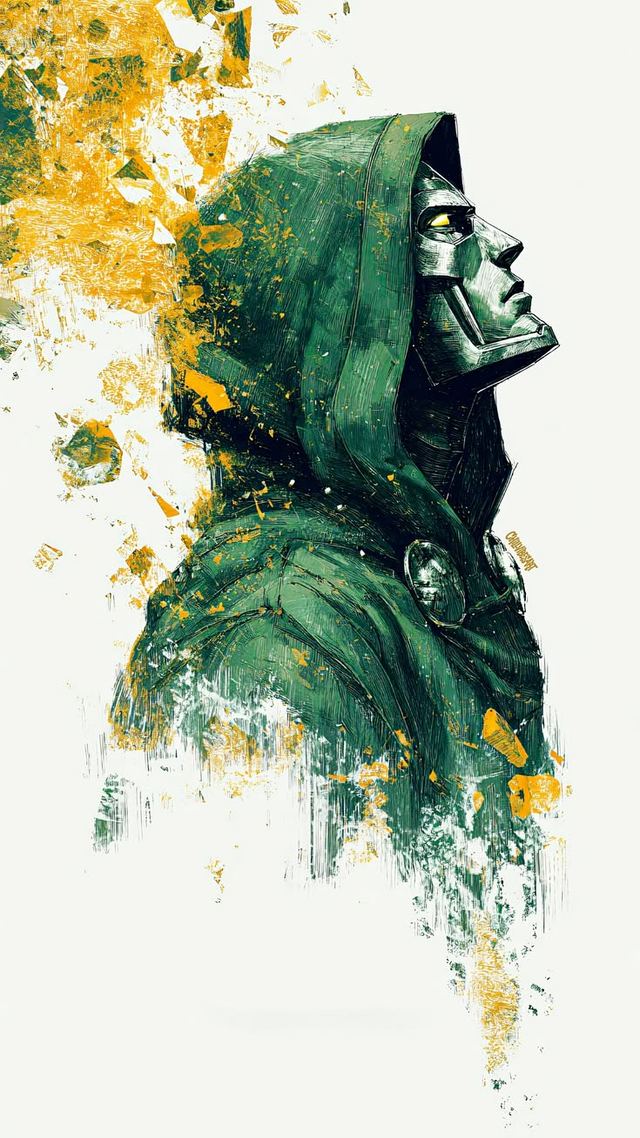
The comics event Marvel has been leaning on hardest through the Doomsday campaign is 2025's One World Under Doom, in which Doctor Doom simply rules Earth. It is worth reading against the four thresholds because it breaks them in a way nothing else does. Doom clears all four comfortably, and the heroes still cannot act cleanly — because he is not generating catastrophe. He is generating order.
That flips the classification question from damage to consent, which is a far harder problem for a superhero team than a monster is. And it points at what the December film is likely to be interested in. Robert Downey Jr. plays Doctor Doom, not Tony Stark, a fact still worth restating because a surprising share of the theories circulating quietly assume otherwise. Between the pivot from Kang to Doom and the comic sitting behind the marketing, the reclassification story on the table appears to be Doom's.
Spider-Man Cosmic Threat: What Is Known Versus What Is Guessed
The argument above leans on real canon, which is what makes it worth having at all. It also stacks a fair amount of inference on top, which makes the following the single most useful block on this page.
| Claim | Status |
|---|---|
| Earth-838's Illuminati killed their own Doctor Strange after his Darkhold use caused an incursion | Confirmed — canon, Multiverse of Madness |
| Tony and Bruce built the Hulkbuster armour as a contingency against Banner | Confirmed — canon, Age of Ultron |
| Bruce Banner is Smart Hulk as of Endgame and She-Hulk | Confirmed — canon |
| Peter's identity was erased from the world's memory at the end of No Way Home | Confirmed — canon, MJ and Ned included |
| Avengers: Doomsday releases 18 December 2026 with Robert Downey Jr. as Doctor Doom | Confirmed |
| The Doomsday logline refers to heroes from three distinct universes | Confirmed — studio logline, with no plot detail attached |
| One World Under Doom is a 2025 comics event in which Doom rules Earth | Confirmed — comics, not an MCU plot description |
| Spider-Man appears in Avengers: Doomsday | Unconfirmed — Marvel has not announced Tom Holland for the film or commented either way |
| The Avengers regard Peter as a threat, or have discussed him at all | Theory — no film or series has depicted this |
| Any version of Peter turns on the Avengers, is corrupted, or goes cosmic | Theory — pure fan speculation, nothing announced |
| A Savage Hulk returns in Spider-Man: Brand New Day | Unconfirmed — fan speculation, no announcement behind it |
The shape of that table is the whole point. Everything in the top half is a matter of record. Everything the theory needs in order to predict anything at all sits in the bottom half.
Why The Question Is Being Asked Right Now
Timing explains the theory better than the theory does. Spider-Man: Brand New Day opens on 31 July 2026 under Destin Daniel Cretton, with Tom Holland, Zendaya, Jacob Batalon, Sadie Sink, Jon Bernthal as the Punisher, Mark Ruffalo as Hulk, Michael Mando and Tramell Tillman. Sink's and Tillman's roles remain officially unannounced, so every identification circulating for either is rumour rather than reporting, and the official synopsis offers only an unspecified “invisible” villain.
Five months later there is an Avengers film, and a year after that another one. A solo picture parked directly in front of a multiversal event is an enormous blank space, and blank spaces get filled. That is where this theory comes from, and whether Peter turns up in Doomsday at all is still unconfirmed.
For the theory to land, four things would have to be true, none of which has been announced by anybody.
- A mechanism of his own — something Peter can do repeatedly, without borrowing a sorcerer to do it.
- A removed brake — a possession, a corruption, a Darkhold equivalent, or a variant wearing his face.
- No available counter — which currently means writing around Strange, Banner, Thor and most of a thirty-name cast list.
- A second incident — because one event is an accident, and a classification needs a pattern.
Four requirements, three of which would mean rewriting what the character fundamentally is. That is the size of the leap this theory asks a reader to make. The interesting finding here is not that Peter might become the villain. It is that the MCU has built a fairly consistent internal logic for when heroes get reclassified, and Peter Parker is close to the least qualified candidate it has.
Frequently asked
Could Spider-Man become a cosmic-level threat in the MCU?
Has the MCU ever shown heroes classifying one of their own as a threat?
Is Spider-Man in Avengers: Doomsday?
What is Avengers: Doomsday actually about?
How does One World Under Doom connect to Avengers: Doomsday?
Why did Peter Parker's identity get erased in No Way Home?
Characters in this story
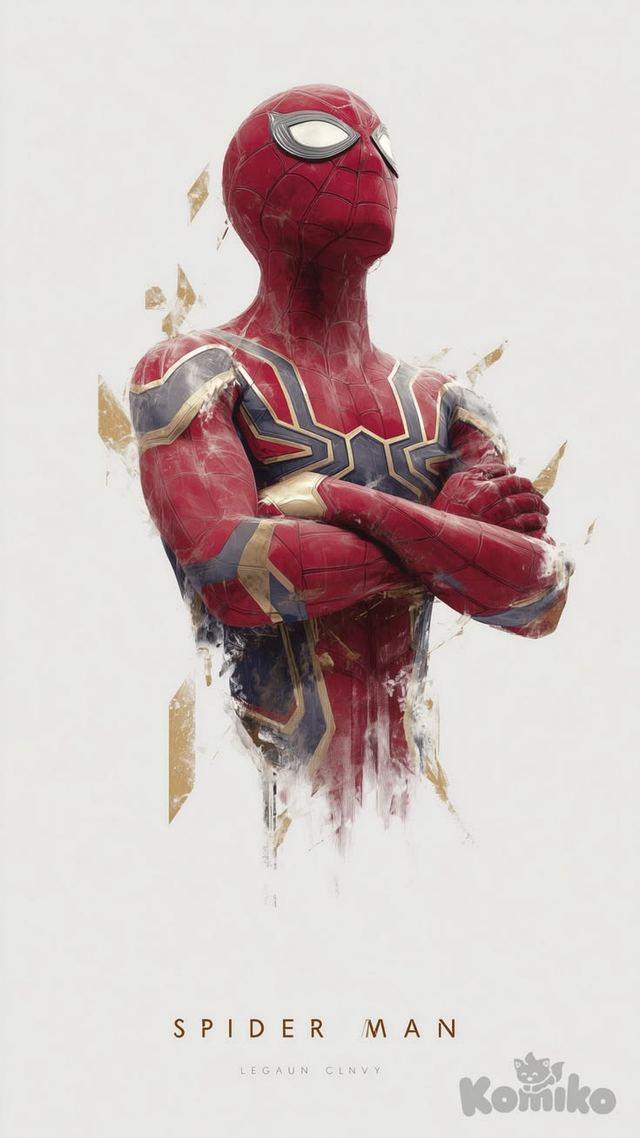
Spider-Man
Peter Benjamin Parker
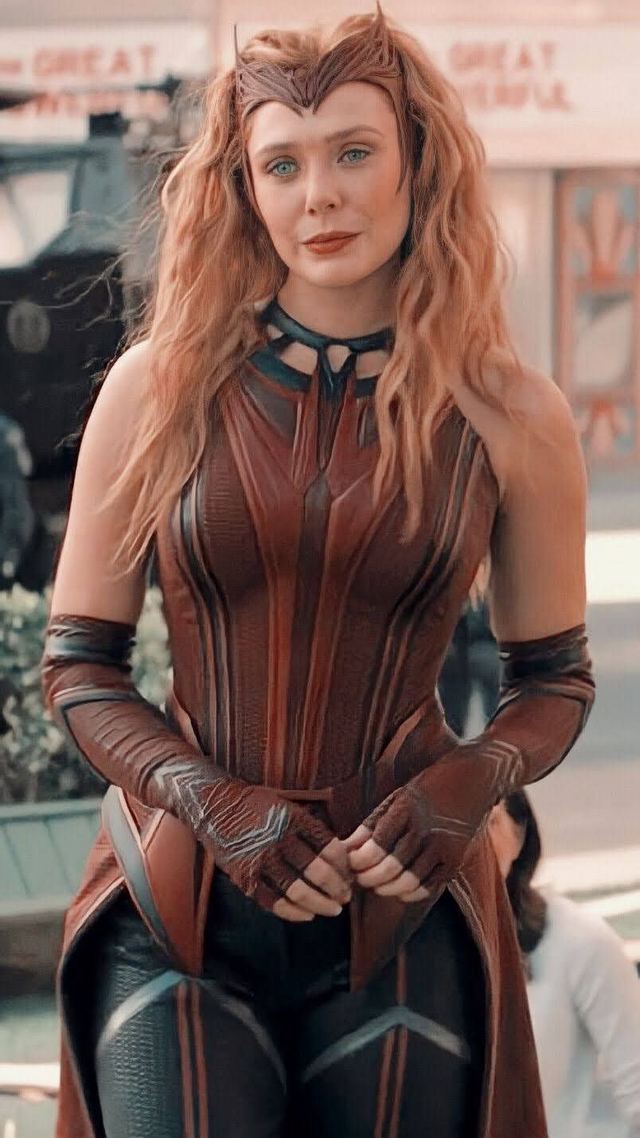
Scarlet Witch
Wanda Maximoff
Hulk
Robert Bruce Banner
Doctor Doom
Victor von Doom
Read next
Accidental Villain: The Theory That Makes Spider-Man Public Enemy No. 1
Peter never turns. He just leaves a door open and something enormous walks through it. Inside the fan theory that…
Spider-Man vs Earth's Mightiest: The Temporal Collapse Manhunt Theory
A timeline coming apart, a trace that ends at Peter Parker, and a team with no good options. The theory is…
The Heartbreak Protocol: MJ, MIT, And The Reunion Rumours
MJ at MIT, a new city, a chance meeting on a New York street. It is a lovely theory built on a real plot point…