Loki Season 2 Ending Explained: The God Of Stories, The Broken Loom And What Loki Actually Became
Loki does not fix the Temporal Loom. He destroys it and replaces it with himself. Here is what the God of Stories ending means, and what it costs him.
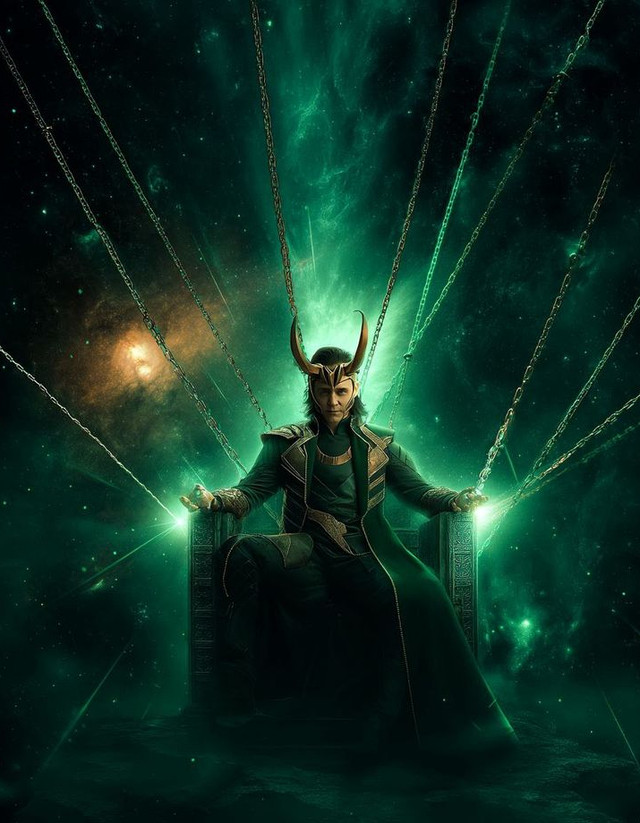
Short answer: after hundreds of failed attempts to repair the Temporal Loom, Loki realises the Loom was never a solution, only a filter that kills every branching timeline it cannot process. So he destroys it. He walks out into the empty space where the multiverse used to be, gathers the dying timeline branches in his hands, and carries them to the throne at the End of Time, where he holds them together permanently. The branches become a tree, Loki becomes its centre, and every reality survives. He does not rule the multiverse. He is its load-bearing structure, alone, forever.
What actually happened
Loki season two is a time-loop story disguised as an engineering problem. Loki's new ability, uncontrolled time-slipping, is initially a symptom and eventually the solution. Once he learns to steer it, he uses centuries of repeated attempts to try every possible fix.
- The Temporal Loom is overloading because it was designed by He Who Remains to weave a single timeline. Every new branch created after Sylvie killed him is more input than it can process.
- Loki spends what is implied to be centuries learning theoretical physics from Ouroboros and Victor Timely, trying to expand the Loom's throughput.
- Every attempt fails, and in most of them Timely dies before he can install the fix. The show is explicit that Loki does this hundreds of times.
- Loki finally understands the framing is wrong: the Loom is not protecting the timelines, it is the reason they are being destroyed. Protecting them requires removing the machine.
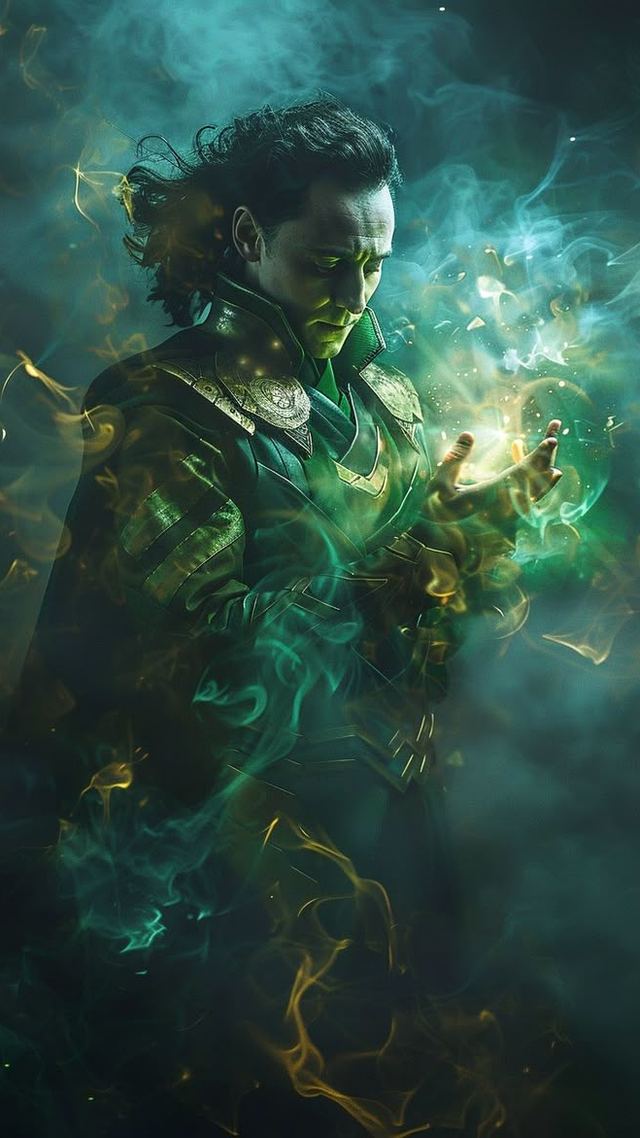
- He goes back, destroys the Loom, and steps into the resulting void. The branches are already dying.
- He gathers them personally, carries them to He Who Remains' throne, and takes the seat. The branches spread out behind him into a structure with the shape of a world tree.
The final image is doing two jobs. It is Yggdrasil, the Norse world tree, which makes Loki's ending an Asgardian one rather than a science-fiction one. And it is a throne, occupied by a character who spent his first film demanding one, taken under the only circumstances that make it worthless.
Loki finally gets the throne. It costs him every relationship he has and he can never leave the chair.
The comics source
The God of Stories is a real identity from the page. In Al Ewing's Loki: Agent of Asgard and its follow-ups, Loki resolves the contradiction of being a character defined by a fixed narrative role by becoming the storyteller instead of the story. The show's version is more literal and more tragic, but the underlying idea, that Loki's escape from being a villain is to take responsibility for the whole narrative, is Ewing's.
| Character | Where they end up |
|---|---|
| Loki | Throne at the End of Time, holding the multiverse together |
| Sylvie | Free, on a branched timeline of her own choosing |
| Mobius | Leaves the TVA to look at the life he was pruned from, without contacting it |
| Hunter B-15 | Effectively running the TVA's new, non-pruning mandate |
| Ouroboros | Still in the workshop, now with a functioning multiverse to maintain |
| Ravonna Renslayer | Exiled to the Void and consumed by Alioth |
| Victor Timely | A Kang variant, returned to his own time |
What it means for the wider story
Three structural consequences flow out of this finale, and all three are still active in 2026.
- The multiverse is now permanent and unpoliced. There is no organisation pruning branches, which means every subsequent multiversal crisis is a genuine crisis rather than a paperwork problem.
- The TVA continues to exist but has been repurposed. It monitors rather than prunes, which is why it could still turn up in Deadpool & Wolverine.
- Kang is structurally gone. Victor Timely is returned to his own era and the Kang throughline was wound down following Jonathan Majors' departure from Marvel in December 2023. The saga's central antagonist role has since been given to Doctor Doom.
That last point is the biggest single pivot in the Multiverse Saga's history, and it is worth stating plainly rather than dancing around: Marvel replaced its planned overarching villain. Robert Downey Jr. was announced as Doctor Doom and will lead Avengers: Doomsday on 18 December 2026. Loki's finale, written and shot before that decision, ends up functioning as a clean exit for the Kang architecture.
What's next
Doomsday arrives on 18 December 2026, directed by Anthony and Joe Russo and written by Michael Waldron, who also ran Loki. That last detail matters more than the casting rumours: the person who built the God of Stories ending is writing the film that has to use it. Marvel's confirmed roster for Doomsday runs to roughly thirty names and the studio's own logline refers to heroes from three distinct universes, which is a multiverse premise that only functions because nothing is pruning branches any more.
Tom Hiddleston is not on Marvel's confirmed Doomsday cast list, and the studio has not commented on whether Loki appears. Anything you have read stating otherwise is unconfirmed. Secret Wars follows on 17 December 2027, with Downey the only publicly confirmed cast member, and Kevin Feige has framed it as the end of the Multiverse Saga.
For the machinery this finale dismantles, our TVA set design breakdown is the companion piece, and the Endgame ending explained covers the escape that created the TVA storyline in the first place.
Frequently asked
What is the God of Stories in Loki season 2?
Why did Loki destroy the Temporal Loom instead of fixing it?
Is Loki still on the throne in 2026?
What happened to Kang after Loki season 2?
Characters in this story
Loki
Loki Laufeyson
Sylvie
Sylvie Laufeydottir
Mobius M. Mobius
Mobius M. Mobius; on Earth, Don
Kang the Conqueror
Nathaniel Richards
Catching up on the MCU? See where this fits on our full timeline.
Read next
Loki Chose the Multiverse Over Asgard — Avengers: Doomsday Might Be Where the Bill Comes Due
Loki chose to save the multiverse and disappeared to do it. This theory asks what that cost New Asgard — and why…
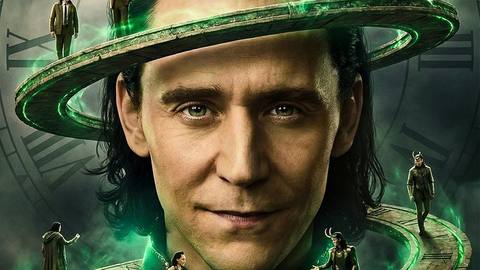
Loki's Bootstrap Paradox: Did Saving the Multiverse Erase the Moment That Created Him?
Loki's entire arc began with a branch he created inside Endgame's 2012 heist. If restructuring the multiverse…
The TVA Set Design Decoded: Every Hidden Detail In Loki's Retro-Bureaucratic Nightmare
Brutalist concrete, 1970s office furniture and an animated clock with a Southern accent. The TVA is the MCU's…